admin

Administrator
Staff member
Industry Professional
Joined
Dec 17, 2025
Messages
147

An Interview with Zoltán Deák – Producer, Sales Agent & Project Developer​

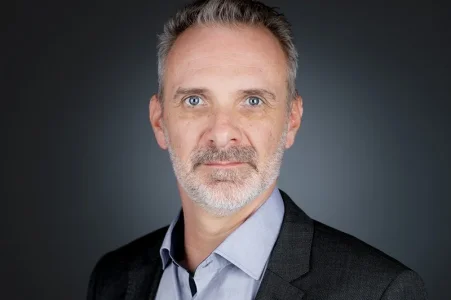
ZoltanDeak.webp

A career in filmmaking doesn't always begin with a camera. Sometimes it starts in an entirely different profession, with the determination to eventually pursue a long-standing ambition.

For this edition of FilmPlatforms Industry Spotlight, we speak with Zoltán Deák, a producer, sales agent and project developer whose journey into the film industry began after nearly a decade working in accounting.

From working on independent film sets to developing international projects and technology-driven production tools, Zoltán shares his perspective on film financing, the future of artificial intelligence, international partnerships, and his vision for expanding film production opportunities beyond Budapest.


1. Tell us a little about yourself and how you found your way into the film industry.​

My name is Zoltán Deák, and I started late in the film industry. I always wanted to do something in film or TV, but moving from Hungary to Australia, going to school there and growing up in the ’80s, I didn’t really have the opportunities — or at least I wasn’t aware of the opportunities I might have had somewhere else.

So I studied accounting and worked in that field for almost ten years. Then, when I was 30, I finally started my career in filmmaking. At first I did corporate videos and weddings, then I began working as a gaffer on low-budget feature films, and later on a few TV commercials. From there I moved into producing and some directing. And over the last seven or eight years I’ve learned the business side of filmmaking as a sales agent, and started developing my own projects.


2. What are you working on at the moment, and how do you see technology changing the industry?​

I’m working on a lot of different things at the moment. I’m developing a slate of films and TV series. There’s also the film incentives application — that one is still in the development phase and we’re about to start beta testing, so it isn’t out in public yet. I’m happy to talk about it in more detail a little later, once it’s live, people are actually using it and we’ve had some feedback.

As for technology, I see it changing things in a massive way. I’m involved with another platform that is being built to completely change how you develop and produce films, and I’m seeing other people building applications to develop and finance films too. Everyone is excited about automating things and finding ways to lessen the burden on producers, who work many, many hours for free. I don’t think people realise how rare it is for a film’s development to actually be financed. It happens, but most of the time it’s passionate independent producers carrying it themselves.

It is going to be really interesting to see how technology and AI, obviously affects every single nook and cranny of filmmaking. Will people adopt AI films? Will people actually watch them? Would they even know half the time whether it’s an AI film or not, because it gets so good? I think that will be a fascinating thing to see.

Being in the middle of it, I’m not convinced either way, but I’m not against it. I’ve seen a lot of people who are very much against it, and I think they are going to be left behind, because you either join this party or you stay outside. You can have your ideas and your beliefs, but at the end of the day technology is going to sweep you away. It’s like when computers arrived and people said, “I’m not going to use a computer, I’m happy with my typewriter.” I’m sure there were plenty of people like that.

So it’s huge, what’s happening. It’s really huge. And you have to be very careful as well especially the people who have control over it, and I don’t think they are being very careful. So watch out.


3. Your application is designed to help producers identify and navigate film incentives around the world. How will it change the way producers plan and finance films?​

Producers are already planning around where to shoot, because it can mean hundreds of thousands and even millions of dollars in savings. So they will look at other places to shoot, if it works and if it makes sense. You have to weigh up the effort it takes to go to that location, to take your cast and so on — but if it makes sense, you do it, because it might make the difference between being able to shoot your film or not.

So it’s a huge thing. There are over 120 jurisdictions in the world offering incentives. Thirty-two of them are in the US; the rest are outside it. And even within a country like Australia, every state has its own scheme. There are lots of countries and lots of different types of incentives, and I don’t think most producers have any real idea of what is out there.

There are consultants who can help, but they obviously cost a lot of money, and most independent producers don’t have the budget to hire someone to work it out for them. Most consultants only cover one territory usually the US and there aren’t many who can do the whole world for you. An independent producer hasn’t got $10,000 to hand to a big firm to assess every country.

So they will have this instead. And obviously this isn’t the end of the process, it’s how they get to a decision. From the system they will find the top three or four countries where they can save the most money, and that’s where they go. Then they get quotes: they go to line producers in those countries and get budgets, and from those budgets they can see exactly where they stand. But this way they only need to get two or three budgets instead of ten, which isn’t feasible anyway.


4. You have a vision of developing Pécs and Baranya county into one of the region’s leading film production hubs. What opportunities do you see for the region, and what will it take to achieve that?​

It’s probably not going to be the region’s leading film production hub. What I’d like to develop is a production hub outside the capital city outside Budapest in this case, or outside any other capital city in the region.

We have the know-how, we have the people, we have the skills, and we have some amazing locations. So it’s only a matter of finding the right projects, finding the right people, and finding people who are happy to take a risk on all this and do something outside their comfort zone.

Capital cities are full. Budapest has plenty of productions already. It is time to bring some of that industry to Pécs and Baranya county, where investment is needed, because the economic climate here is dismal. There are huge issues with not having enough industry in this county.

And with filmmaking, you’re not just bringing in a factory that employs process workers and maybe a couple of people in accounts payable. You’re bringing in an industry that employs people from every single walk of life. You have accountants, you have builders, you have puppet makers, you have special effects people, lighting people, camera operators, designers many, many people from all kinds of backgrounds and all kinds of industries, working on films together. And that is the exciting part of it.


5. Based on your experience working with international partners, what are the biggest challenges producers face today and what makes a long-term international partnership truly successful?​

As always, the biggest challenge is finding the money. Finding the investors who will take the risk and put up the money to make your film. That is the single hardest thing.

So how do we make a partnership successful? Once we do find people who are happy to finance our project, we make sure that it is a success. We do everything in our power to be ethical, to make sure the money invested is safe and that they make a good return. Because guess what if we do that, they will come back, and they will invest in the next film. And the next one, and the next one.

That is the key here. That is what’s important. We need people we can work with potentially ten or twenty years from now. That is truly the most valuable thing there is these days that someone is happy to hand over their money to you so you can invest it in a film production.


6. Which of your current projects excites you the most, and what are your main goals for the next few years?​

All of the projects are really, really exciting, and I think we’ve got an amazing slate. But there is one that is truly special and not just because I created it. It’s a TV series that I can simply see in front of me. I can see it up on Netflix.

I created it with Owen Cooper in mind, from Adolescence. I think he really needs a great project before he grows up too much and becomes a man another project while he’s still young, where he can show his incredible prowess as an actor, because I think he is absolutely amazing.

It’s a psychological thriller. Not really a miniseries three seasons, eight to ten parts each. It’s something I’m very proud of having created, and I’m going to try to get it off the ground. But we have some really, really stunning projects across the whole slate.


7. If you could give one piece of advice to filmmakers and producers who want to build successful international partnerships, what would it be?​

Make sure that as with all partnerships, business partnerships, friendships, everything you treat the other person the way you want to be treated. If they are not as knowledgeable as you, then you teach them things. If they are smarter than you, then you learn from them. Just treat them well, and look for ways to work together. Introduce them to more people, and get them to introduce you to more people.

And don’t expect anything in the short term. As a producer, this game is for the long haul. There is an incredible amount of work to be done before you actually get to producing films. So be prepared to work a lot for nothing.

Learn, learn, learn from everything, from everywhere. We are very lucky these days: we’ve got YouTube, we’ve got AI. I mean, my God, you can literally get it to teach you anything. So go for it. Be creative. Don’t believe the naysayers just push ahead and do it.


About Zoltán Deák​


Zoltán Deák is a film producer, sales agent and project developer with experience spanning independent film production, directing, international sales and project development.

Having started his filmmaking career at the age of 30 after working in accounting, he is now developing film and television projects alongside technology-based tools designed to support producers in navigating international production incentives.

He is also working to expand film production opportunities in Pécs and Baranya county, Hungary, with a focus on developing production activity beyond the capital.

Website: https://pillangoprod.com/

IMDb: Zoltán Deák

FilmPlatforms sincerely thanks Zoltán Deák for sharing his experience, professional insights and perspective on the future of independent filmmaking with our international film community.

FilmPlatforms Industry Spotlight – Connecting film professionals, sharing industry knowledge, and building meaningful conversations.
 

An Interview with Zoltán Deák – Producer, Sales Agent & Project Developer​

View attachment 373

A career in filmmaking doesn't always begin with a camera. Sometimes it starts in an entirely different profession, with the determination to eventually pursue a long-standing ambition.

For this edition of FilmPlatforms Industry Spotlight, we speak with Zoltán Deák, a producer, sales agent and project developer whose journey into the film industry began after nearly a decade working in accounting.

From working on independent film sets to developing international projects and technology-driven production tools, Zoltán shares his perspective on film financing, the future of artificial intelligence, international partnerships, and his vision for expanding film production opportunities beyond Budapest.


1. Tell us a little about yourself and how you found your way into the film industry.​

My name is Zoltán Deák, and I started late in the film industry. I always wanted to do something in film or TV, but moving from Hungary to Australia, going to school there and growing up in the ’80s, I didn’t really have the opportunities — or at least I wasn’t aware of the opportunities I might have had somewhere else.

So I studied accounting and worked in that field for almost ten years. Then, when I was 30, I finally started my career in filmmaking. At first I did corporate videos and weddings, then I began working as a gaffer on low-budget feature films, and later on a few TV commercials. From there I moved into producing and some directing. And over the last seven or eight years I’ve learned the business side of filmmaking as a sales agent, and started developing my own projects.


2. What are you working on at the moment, and how do you see technology changing the industry?​

I’m working on a lot of different things at the moment. I’m developing a slate of films and TV series. There’s also the film incentives application — that one is still in the development phase and we’re about to start beta testing, so it isn’t out in public yet. I’m happy to talk about it in more detail a little later, once it’s live, people are actually using it and we’ve had some feedback.

As for technology, I see it changing things in a massive way. I’m involved with another platform that is being built to completely change how you develop and produce films, and I’m seeing other people building applications to develop and finance films too. Everyone is excited about automating things and finding ways to lessen the burden on producers, who work many, many hours for free. I don’t think people realise how rare it is for a film’s development to actually be financed. It happens, but most of the time it’s passionate independent producers carrying it themselves.

It is going to be really interesting to see how technology and AI, obviously affects every single nook and cranny of filmmaking. Will people adopt AI films? Will people actually watch them? Would they even know half the time whether it’s an AI film or not, because it gets so good? I think that will be a fascinating thing to see.

Being in the middle of it, I’m not convinced either way, but I’m not against it. I’ve seen a lot of people who are very much against it, and I think they are going to be left behind, because you either join this party or you stay outside. You can have your ideas and your beliefs, but at the end of the day technology is going to sweep you away. It’s like when computers arrived and people said, “I’m not going to use a computer, I’m happy with my typewriter.” I’m sure there were plenty of people like that.

So it’s huge, what’s happening. It’s really huge. And you have to be very careful as well especially the people who have control over it, and I don’t think they are being very careful. So watch out.


3. Your application is designed to help producers identify and navigate film incentives around the world. How will it change the way producers plan and finance films?​

Producers are already planning around where to shoot, because it can mean hundreds of thousands and even millions of dollars in savings. So they will look at other places to shoot, if it works and if it makes sense. You have to weigh up the effort it takes to go to that location, to take your cast and so on — but if it makes sense, you do it, because it might make the difference between being able to shoot your film or not.

So it’s a huge thing. There are over 120 jurisdictions in the world offering incentives. Thirty-two of them are in the US; the rest are outside it. And even within a country like Australia, every state has its own scheme. There are lots of countries and lots of different types of incentives, and I don’t think most producers have any real idea of what is out there.

There are consultants who can help, but they obviously cost a lot of money, and most independent producers don’t have the budget to hire someone to work it out for them. Most consultants only cover one territory usually the US and there aren’t many who can do the whole world for you. An independent producer hasn’t got $10,000 to hand to a big firm to assess every country.

So they will have this instead. And obviously this isn’t the end of the process, it’s how they get to a decision. From the system they will find the top three or four countries where they can save the most money, and that’s where they go. Then they get quotes: they go to line producers in those countries and get budgets, and from those budgets they can see exactly where they stand. But this way they only need to get two or three budgets instead of ten, which isn’t feasible anyway.


4. You have a vision of developing Pécs and Baranya county into one of the region’s leading film production hubs. What opportunities do you see for the region, and what will it take to achieve that?​

It’s probably not going to be the region’s leading film production hub. What I’d like to develop is a production hub outside the capital city outside Budapest in this case, or outside any other capital city in the region.

We have the know-how, we have the people, we have the skills, and we have some amazing locations. So it’s only a matter of finding the right projects, finding the right people, and finding people who are happy to take a risk on all this and do something outside their comfort zone.

Capital cities are full. Budapest has plenty of productions already. It is time to bring some of that industry to Pécs and Baranya county, where investment is needed, because the economic climate here is dismal. There are huge issues with not having enough industry in this county.

And with filmmaking, you’re not just bringing in a factory that employs process workers and maybe a couple of people in accounts payable. You’re bringing in an industry that employs people from every single walk of life. You have accountants, you have builders, you have puppet makers, you have special effects people, lighting people, camera operators, designers many, many people from all kinds of backgrounds and all kinds of industries, working on films together. And that is the exciting part of it.


5. Based on your experience working with international partners, what are the biggest challenges producers face today and what makes a long-term international partnership truly successful?​

As always, the biggest challenge is finding the money. Finding the investors who will take the risk and put up the money to make your film. That is the single hardest thing.

So how do we make a partnership successful? Once we do find people who are happy to finance our project, we make sure that it is a success. We do everything in our power to be ethical, to make sure the money invested is safe and that they make a good return. Because guess what if we do that, they will come back, and they will invest in the next film. And the next one, and the next one.

That is the key here. That is what’s important. We need people we can work with potentially ten or twenty years from now. That is truly the most valuable thing there is these days that someone is happy to hand over their money to you so you can invest it in a film production.


6. Which of your current projects excites you the most, and what are your main goals for the next few years?​

All of the projects are really, really exciting, and I think we’ve got an amazing slate. But there is one that is truly special and not just because I created it. It’s a TV series that I can simply see in front of me. I can see it up on Netflix.

I created it with Owen Cooper in mind, from Adolescence. I think he really needs a great project before he grows up too much and becomes a man another project while he’s still young, where he can show his incredible prowess as an actor, because I think he is absolutely amazing.

It’s a psychological thriller. Not really a miniseries three seasons, eight to ten parts each. It’s something I’m very proud of having created, and I’m going to try to get it off the ground. But we have some really, really stunning projects across the whole slate.


7. If you could give one piece of advice to filmmakers and producers who want to build successful international partnerships, what would it be?​

Make sure that as with all partnerships, business partnerships, friendships, everything you treat the other person the way you want to be treated. If they are not as knowledgeable as you, then you teach them things. If they are smarter than you, then you learn from them. Just treat them well, and look for ways to work together. Introduce them to more people, and get them to introduce you to more people.

And don’t expect anything in the short term. As a producer, this game is for the long haul. There is an incredible amount of work to be done before you actually get to producing films. So be prepared to work a lot for nothing.

Learn, learn, learn from everything, from everywhere. We are very lucky these days: we’ve got YouTube, we’ve got AI. I mean, my God, you can literally get it to teach you anything. So go for it. Be creative. Don’t believe the naysayers just push ahead and do it.


About Zoltán Deák​


Zoltán Deák is a film producer, sales agent and project developer with experience spanning independent film production, directing, international sales and project development.

Having started his filmmaking career at the age of 30 after working in accounting, he is now developing film and television projects alongside technology-based tools designed to support producers in navigating international production incentives.

He is also working to expand film production opportunities in Pécs and Baranya county, Hungary, with a focus on developing production activity beyond the capital.

Website: https://pillangoprod.com/

IMDb: Zoltán Deák

FilmPlatforms sincerely thanks Zoltán Deák for sharing his experience, professional insights and perspective on the future of independent filmmaking with our international film community.

FilmPlatforms Industry Spotlight – Connecting film professionals, sharing industry knowledge, and building meaningful conversations.

A film’s success depends not only on how it’s made, but also on how early international markets are considered during development. That can often make all the difference.
 

An Interview with Zoltán Deák – Producer, Sales Agent & Project Developer​

View attachment 373

A career in filmmaking doesn't always begin with a camera. Sometimes it starts in an entirely different profession, with the determination to eventually pursue a long-standing ambition.

For this edition of FilmPlatforms Industry Spotlight, we speak with Zoltán Deák, a producer, sales agent and project developer whose journey into the film industry began after nearly a decade working in accounting.

From working on independent film sets to developing international projects and technology-driven production tools, Zoltán shares his perspective on film financing, the future of artificial intelligence, international partnerships, and his vision for expanding film production opportunities beyond Budapest.


1. Tell us a little about yourself and how you found your way into the film industry.​

My name is Zoltán Deák, and I started late in the film industry. I always wanted to do something in film or TV, but moving from Hungary to Australia, going to school there and growing up in the ’80s, I didn’t really have the opportunities — or at least I wasn’t aware of the opportunities I might have had somewhere else.

So I studied accounting and worked in that field for almost ten years. Then, when I was 30, I finally started my career in filmmaking. At first I did corporate videos and weddings, then I began working as a gaffer on low-budget feature films, and later on a few TV commercials. From there I moved into producing and some directing. And over the last seven or eight years I’ve learned the business side of filmmaking as a sales agent, and started developing my own projects.


2. What are you working on at the moment, and how do you see technology changing the industry?​

I’m working on a lot of different things at the moment. I’m developing a slate of films and TV series. There’s also the film incentives application — that one is still in the development phase and we’re about to start beta testing, so it isn’t out in public yet. I’m happy to talk about it in more detail a little later, once it’s live, people are actually using it and we’ve had some feedback.

As for technology, I see it changing things in a massive way. I’m involved with another platform that is being built to completely change how you develop and produce films, and I’m seeing other people building applications to develop and finance films too. Everyone is excited about automating things and finding ways to lessen the burden on producers, who work many, many hours for free. I don’t think people realise how rare it is for a film’s development to actually be financed. It happens, but most of the time it’s passionate independent producers carrying it themselves.

It is going to be really interesting to see how technology and AI, obviously affects every single nook and cranny of filmmaking. Will people adopt AI films? Will people actually watch them? Would they even know half the time whether it’s an AI film or not, because it gets so good? I think that will be a fascinating thing to see.

Being in the middle of it, I’m not convinced either way, but I’m not against it. I’ve seen a lot of people who are very much against it, and I think they are going to be left behind, because you either join this party or you stay outside. You can have your ideas and your beliefs, but at the end of the day technology is going to sweep you away. It’s like when computers arrived and people said, “I’m not going to use a computer, I’m happy with my typewriter.” I’m sure there were plenty of people like that.

So it’s huge, what’s happening. It’s really huge. And you have to be very careful as well especially the people who have control over it, and I don’t think they are being very careful. So watch out.


3. Your application is designed to help producers identify and navigate film incentives around the world. How will it change the way producers plan and finance films?​

Producers are already planning around where to shoot, because it can mean hundreds of thousands and even millions of dollars in savings. So they will look at other places to shoot, if it works and if it makes sense. You have to weigh up the effort it takes to go to that location, to take your cast and so on — but if it makes sense, you do it, because it might make the difference between being able to shoot your film or not.

So it’s a huge thing. There are over 120 jurisdictions in the world offering incentives. Thirty-two of them are in the US; the rest are outside it. And even within a country like Australia, every state has its own scheme. There are lots of countries and lots of different types of incentives, and I don’t think most producers have any real idea of what is out there.

There are consultants who can help, but they obviously cost a lot of money, and most independent producers don’t have the budget to hire someone to work it out for them. Most consultants only cover one territory usually the US and there aren’t many who can do the whole world for you. An independent producer hasn’t got $10,000 to hand to a big firm to assess every country.

So they will have this instead. And obviously this isn’t the end of the process, it’s how they get to a decision. From the system they will find the top three or four countries where they can save the most money, and that’s where they go. Then they get quotes: they go to line producers in those countries and get budgets, and from those budgets they can see exactly where they stand. But this way they only need to get two or three budgets instead of ten, which isn’t feasible anyway.


4. You have a vision of developing Pécs and Baranya county into one of the region’s leading film production hubs. What opportunities do you see for the region, and what will it take to achieve that?​

It’s probably not going to be the region’s leading film production hub. What I’d like to develop is a production hub outside the capital city outside Budapest in this case, or outside any other capital city in the region.

We have the know-how, we have the people, we have the skills, and we have some amazing locations. So it’s only a matter of finding the right projects, finding the right people, and finding people who are happy to take a risk on all this and do something outside their comfort zone.

Capital cities are full. Budapest has plenty of productions already. It is time to bring some of that industry to Pécs and Baranya county, where investment is needed, because the economic climate here is dismal. There are huge issues with not having enough industry in this county.

And with filmmaking, you’re not just bringing in a factory that employs process workers and maybe a couple of people in accounts payable. You’re bringing in an industry that employs people from every single walk of life. You have accountants, you have builders, you have puppet makers, you have special effects people, lighting people, camera operators, designers many, many people from all kinds of backgrounds and all kinds of industries, working on films together. And that is the exciting part of it.


5. Based on your experience working with international partners, what are the biggest challenges producers face today and what makes a long-term international partnership truly successful?​

As always, the biggest challenge is finding the money. Finding the investors who will take the risk and put up the money to make your film. That is the single hardest thing.

So how do we make a partnership successful? Once we do find people who are happy to finance our project, we make sure that it is a success. We do everything in our power to be ethical, to make sure the money invested is safe and that they make a good return. Because guess what if we do that, they will come back, and they will invest in the next film. And the next one, and the next one.

That is the key here. That is what’s important. We need people we can work with potentially ten or twenty years from now. That is truly the most valuable thing there is these days that someone is happy to hand over their money to you so you can invest it in a film production.


6. Which of your current projects excites you the most, and what are your main goals for the next few years?​

All of the projects are really, really exciting, and I think we’ve got an amazing slate. But there is one that is truly special and not just because I created it. It’s a TV series that I can simply see in front of me. I can see it up on Netflix.

I created it with Owen Cooper in mind, from Adolescence. I think he really needs a great project before he grows up too much and becomes a man another project while he’s still young, where he can show his incredible prowess as an actor, because I think he is absolutely amazing.

It’s a psychological thriller. Not really a miniseries three seasons, eight to ten parts each. It’s something I’m very proud of having created, and I’m going to try to get it off the ground. But we have some really, really stunning projects across the whole slate.


7. If you could give one piece of advice to filmmakers and producers who want to build successful international partnerships, what would it be?​

Make sure that as with all partnerships, business partnerships, friendships, everything you treat the other person the way you want to be treated. If they are not as knowledgeable as you, then you teach them things. If they are smarter than you, then you learn from them. Just treat them well, and look for ways to work together. Introduce them to more people, and get them to introduce you to more people.

And don’t expect anything in the short term. As a producer, this game is for the long haul. There is an incredible amount of work to be done before you actually get to producing films. So be prepared to work a lot for nothing.

Learn, learn, learn from everything, from everywhere. We are very lucky these days: we’ve got YouTube, we’ve got AI. I mean, my God, you can literally get it to teach you anything. So go for it. Be creative. Don’t believe the naysayers just push ahead and do it.


About Zoltán Deák​


Zoltán Deák is a film producer, sales agent and project developer with experience spanning independent film production, directing, international sales and project development.

Having started his filmmaking career at the age of 30 after working in accounting, he is now developing film and television projects alongside technology-based tools designed to support producers in navigating international production incentives.

He is also working to expand film production opportunities in Pécs and Baranya county, Hungary, with a focus on developing production activity beyond the capital.

Website: https://pillangoprod.com/

IMDb: Zoltán Deák

FilmPlatforms sincerely thanks Zoltán Deák for sharing his experience, professional insights and perspective on the future of independent filmmaking with our international film community.

FilmPlatforms Industry Spotlight – Connecting film professionals, sharing industry knowledge, and building meaningful conversations.
Thanks for sharing this, Zoltan. The part about finding the money being the hardest part stuck with me. And treating people right so they come back for the next one — that's the long game. Appreciate you sharing it.
 

An Interview with Zoltán Deák – Producer, Sales Agent & Project Developer​

View attachment 373

A career in filmmaking doesn't always begin with a camera. Sometimes it starts in an entirely different profession, with the determination to eventually pursue a long-standing ambition.

For this edition of FilmPlatforms Industry Spotlight, we speak with Zoltán Deák, a producer, sales agent and project developer whose journey into the film industry began after nearly a decade working in accounting.

From working on independent film sets to developing international projects and technology-driven production tools, Zoltán shares his perspective on film financing, the future of artificial intelligence, international partnerships, and his vision for expanding film production opportunities beyond Budapest.


1. Tell us a little about yourself and how you found your way into the film industry.​

My name is Zoltán Deák, and I started late in the film industry. I always wanted to do something in film or TV, but moving from Hungary to Australia, going to school there and growing up in the ’80s, I didn’t really have the opportunities — or at least I wasn’t aware of the opportunities I might have had somewhere else.

So I studied accounting and worked in that field for almost ten years. Then, when I was 30, I finally started my career in filmmaking. At first I did corporate videos and weddings, then I began working as a gaffer on low-budget feature films, and later on a few TV commercials. From there I moved into producing and some directing. And over the last seven or eight years I’ve learned the business side of filmmaking as a sales agent, and started developing my own projects.


2. What are you working on at the moment, and how do you see technology changing the industry?​

I’m working on a lot of different things at the moment. I’m developing a slate of films and TV series. There’s also the film incentives application — that one is still in the development phase and we’re about to start beta testing, so it isn’t out in public yet. I’m happy to talk about it in more detail a little later, once it’s live, people are actually using it and we’ve had some feedback.

As for technology, I see it changing things in a massive way. I’m involved with another platform that is being built to completely change how you develop and produce films, and I’m seeing other people building applications to develop and finance films too. Everyone is excited about automating things and finding ways to lessen the burden on producers, who work many, many hours for free. I don’t think people realise how rare it is for a film’s development to actually be financed. It happens, but most of the time it’s passionate independent producers carrying it themselves.

It is going to be really interesting to see how technology and AI, obviously affects every single nook and cranny of filmmaking. Will people adopt AI films? Will people actually watch them? Would they even know half the time whether it’s an AI film or not, because it gets so good? I think that will be a fascinating thing to see.

Being in the middle of it, I’m not convinced either way, but I’m not against it. I’ve seen a lot of people who are very much against it, and I think they are going to be left behind, because you either join this party or you stay outside. You can have your ideas and your beliefs, but at the end of the day technology is going to sweep you away. It’s like when computers arrived and people said, “I’m not going to use a computer, I’m happy with my typewriter.” I’m sure there were plenty of people like that.

So it’s huge, what’s happening. It’s really huge. And you have to be very careful as well especially the people who have control over it, and I don’t think they are being very careful. So watch out.


3. Your application is designed to help producers identify and navigate film incentives around the world. How will it change the way producers plan and finance films?​

Producers are already planning around where to shoot, because it can mean hundreds of thousands and even millions of dollars in savings. So they will look at other places to shoot, if it works and if it makes sense. You have to weigh up the effort it takes to go to that location, to take your cast and so on — but if it makes sense, you do it, because it might make the difference between being able to shoot your film or not.

So it’s a huge thing. There are over 120 jurisdictions in the world offering incentives. Thirty-two of them are in the US; the rest are outside it. And even within a country like Australia, every state has its own scheme. There are lots of countries and lots of different types of incentives, and I don’t think most producers have any real idea of what is out there.

There are consultants who can help, but they obviously cost a lot of money, and most independent producers don’t have the budget to hire someone to work it out for them. Most consultants only cover one territory usually the US and there aren’t many who can do the whole world for you. An independent producer hasn’t got $10,000 to hand to a big firm to assess every country.

So they will have this instead. And obviously this isn’t the end of the process, it’s how they get to a decision. From the system they will find the top three or four countries where they can save the most money, and that’s where they go. Then they get quotes: they go to line producers in those countries and get budgets, and from those budgets they can see exactly where they stand. But this way they only need to get two or three budgets instead of ten, which isn’t feasible anyway.


4. You have a vision of developing Pécs and Baranya county into one of the region’s leading film production hubs. What opportunities do you see for the region, and what will it take to achieve that?​

It’s probably not going to be the region’s leading film production hub. What I’d like to develop is a production hub outside the capital city outside Budapest in this case, or outside any other capital city in the region.

We have the know-how, we have the people, we have the skills, and we have some amazing locations. So it’s only a matter of finding the right projects, finding the right people, and finding people who are happy to take a risk on all this and do something outside their comfort zone.

Capital cities are full. Budapest has plenty of productions already. It is time to bring some of that industry to Pécs and Baranya county, where investment is needed, because the economic climate here is dismal. There are huge issues with not having enough industry in this county.

And with filmmaking, you’re not just bringing in a factory that employs process workers and maybe a couple of people in accounts payable. You’re bringing in an industry that employs people from every single walk of life. You have accountants, you have builders, you have puppet makers, you have special effects people, lighting people, camera operators, designers many, many people from all kinds of backgrounds and all kinds of industries, working on films together. And that is the exciting part of it.


5. Based on your experience working with international partners, what are the biggest challenges producers face today and what makes a long-term international partnership truly successful?​

As always, the biggest challenge is finding the money. Finding the investors who will take the risk and put up the money to make your film. That is the single hardest thing.

So how do we make a partnership successful? Once we do find people who are happy to finance our project, we make sure that it is a success. We do everything in our power to be ethical, to make sure the money invested is safe and that they make a good return. Because guess what if we do that, they will come back, and they will invest in the next film. And the next one, and the next one.

That is the key here. That is what’s important. We need people we can work with potentially ten or twenty years from now. That is truly the most valuable thing there is these days that someone is happy to hand over their money to you so you can invest it in a film production.


6. Which of your current projects excites you the most, and what are your main goals for the next few years?​

All of the projects are really, really exciting, and I think we’ve got an amazing slate. But there is one that is truly special and not just because I created it. It’s a TV series that I can simply see in front of me. I can see it up on Netflix.

I created it with Owen Cooper in mind, from Adolescence. I think he really needs a great project before he grows up too much and becomes a man another project while he’s still young, where he can show his incredible prowess as an actor, because I think he is absolutely amazing.

It’s a psychological thriller. Not really a miniseries three seasons, eight to ten parts each. It’s something I’m very proud of having created, and I’m going to try to get it off the ground. But we have some really, really stunning projects across the whole slate.


7. If you could give one piece of advice to filmmakers and producers who want to build successful international partnerships, what would it be?​

Make sure that as with all partnerships, business partnerships, friendships, everything you treat the other person the way you want to be treated. If they are not as knowledgeable as you, then you teach them things. If they are smarter than you, then you learn from them. Just treat them well, and look for ways to work together. Introduce them to more people, and get them to introduce you to more people.

And don’t expect anything in the short term. As a producer, this game is for the long haul. There is an incredible amount of work to be done before you actually get to producing films. So be prepared to work a lot for nothing.

Learn, learn, learn from everything, from everywhere. We are very lucky these days: we’ve got YouTube, we’ve got AI. I mean, my God, you can literally get it to teach you anything. So go for it. Be creative. Don’t believe the naysayers just push ahead and do it.


About Zoltán Deák​


Zoltán Deák is a film producer, sales agent and project developer with experience spanning independent film production, directing, international sales and project development.

Having started his filmmaking career at the age of 30 after working in accounting, he is now developing film and television projects alongside technology-based tools designed to support producers in navigating international production incentives.

He is also working to expand film production opportunities in Pécs and Baranya county, Hungary, with a focus on developing production activity beyond the capital.

Website: https://pillangoprod.com/

IMDb: Zoltán Deák

FilmPlatforms sincerely thanks Zoltán Deák for sharing his experience, professional insights and perspective on the future of independent filmmaking with our international film community.

FilmPlatforms Industry Spotlight – Connecting film professionals, sharing industry knowledge, and building meaningful conversations.

Building production hubs outside major cities is a great idea, but keeping local crews busy between productions is the real challenge. One successful shoot is a good start, but it takes a steady flow of projects to build a lasting film industry.
 
Back
Top