A Writer, A Father, A Creator - And the Projects That Shape My Journey

Anderson-Mark-Ian

Member
Early-Career Professional
Joined
Sep 25, 2026
Messages
44
Hello FilmPlatforms community - I’m Mark, an independent writer from the UK.

My main project is Bloom, an animated musical built around a world where emotion shapes the environment itself. I’ve been developing the screenplay, original soundtrack and world‑building in parallel, crafting a story that begins with innocence and wonder before sliding into deeper emotional territory. I’m currently pressure‑testing the opening pages and refining the pacing and emotional beats as Bloom moves into its next development phase.

Alongside Bloom, I’m also developing AI‑ien, a second animated feature concept exploring sci‑fi, humour and connection - a very different flavour to Bloom, but part of the same creative journey.

I’m here to connect, learn, and share the process. Looking forward to meeting fellow filmmakers, writers and producers, seeing what everyone is creating, and hopefully pushing Bloom in the right direction as it continues to grow.
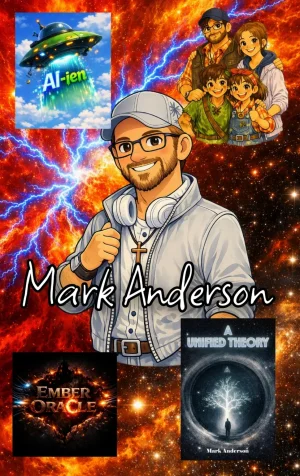
Screenshot_20260920_212242_Collage Maker - GridArt.webp

Kind regards,

Mark
 
Last edited by a moderator:
Hello FilmPlatforms community - I’m Mark, an independent writer from the UK.

My main project is Bloom, an animated musical built around a world where emotion shapes the environment itself. I’ve been developing the screenplay, original soundtrack and world‑building in parallel, crafting a story that begins with innocence and wonder before sliding into deeper emotional territory. I’m currently pressure‑testing the opening pages and refining the pacing and emotional beats as Bloom moves into its next development phase.

Alongside Bloom, I’m also developing AI‑ien, a second animated feature concept exploring sci‑fi, humour and connection - a very different flavour to Bloom, but part of the same creative journey.

I’m here to connect, learn, and share the process. Looking forward to meeting fellow filmmakers, writers and producers, seeing what everyone is creating, and hopefully pushing Bloom in the right direction as it continues to grow.

View attachment 276

Kind regards,

Mark

Welcome, Mark. Bloom sounds like the kind of project where the world-building could easily become part of the storytelling rather than just the backdrop, especially if the environment is reacting to emotion.

One thing I’d be careful with in the opening pages is trying to explain too much of that world too early. If the audience can first experience the rule through a character see the environment change because of something they feel you may not need to explain much at all. That could also help with the pacing you’re currently working on.

I’d be interested to know: what does the audience actually see happen in the first 5–10 minutes of Bloom that makes them understand this world is different?
 
In the first 5–10 minutes, the audience learns the rules of Bloom’s world entirely through Thea - nothing is explained.

We meet her in a quiet, emotionally loaded moment, and the environment reacts before she does. Small, subtle shifts: colour, movement, the way light behaves around her. It’s gentle at first - almost easy to miss - but it tells the audience that something inside her is shaping what’s outside her.

As her emotional state changes, the forest responds in ways that feel natural rather than magical: leaves ripple without wind, colours warm or cool depending on what she feels, and the space around her seems to breathe with her. It’s all grounded in her perspective, so the audience experiences the rule before they ever understand it.

By the time we reach the 10‑minute mark, viewers don’t need an explanation - they’ve already seen the world shift because of her, and that’s enough to make them lean in.
Welcome, Mark. Bloom sounds like the kind of project where the world-building could easily become part of the storytelling rather than just the backdrop, especially if the environment is reacting to emotion.

One thing I’d be careful with in the opening pages is trying to explain too much of that world too early. If the audience can first experience the rule through a character see the environment change because of something they feel you may not need to explain much at all. That could also help with the pacing you’re currently working on.

I’d be interested to know: what does the audience actually see happen in the first 5–10 minutes of Bloom that makes
 
That sounds visually very interesting, but I’m also curious about the production side of it.

Do you already have an idea of what animation technique you would use for Bloom and roughly what budget range you think the feature could be produced for? Having the environment constantly respond to the characters’ emotions could make the film visually distinctive, but I imagine it could also have a significant impact on production.

From a producer or investor perspective, it would be interesting to understand how you see that creative idea translating into a realistically producible film.
 
Hi, thanks for the thoughtful question. I really appreciate you digging into the production side of Bloom.

The emotional‑responsive environment is definitely one of Bloom’s defining features, but it’s designed to be scalable rather than technically overwhelming. The shifts in the world are subtle, character‑driven changes - colour, light behaviour, texture movement - rather than full environment transformations every few seconds. That keeps the emotional impact strong while keeping production realistic.

In terms of animation technique, Bloom is intentionally flexible at this stage. The project could be approached through stylised 2D, hybrid 2D/3D, or a painterly 3D pipeline depending on the studio and the visual identity we settle on. The emotional‑reactive elements can be handled through compositing and controlled environmental layers rather than bespoke full‑scene rebuilds, which keeps the idea producible.

Budget‑wise, Bloom sits in the independent animated feature range, not the studio‑tier bracket. The worldbuilding looks rich on screen, but the actual production demands are designed to be achievable without needing a Disney/Pixar‑scale pipeline. The emotional responsiveness is more about art direction and smart layering than heavy VFX.

My goal is to make sure the creative idea translates into something that feels distinctive while still being realistic for an independent production model - scalable, modular, and built around emotional storytelling rather than technical spectacle.

Happy to go deeper into any of those areas if it’s useful.
 
Hi, thanks for the thoughtful question. I really appreciate you digging into the production side of Bloom.

The emotional‑responsive environment is definitely one of Bloom’s defining features, but it’s designed to be scalable rather than technically overwhelming. The shifts in the world are subtle, character‑driven changes - colour, light behaviour, texture movement - rather than full environment transformations every few seconds. That keeps the emotional impact strong while keeping production realistic.

In terms of animation technique, Bloom is intentionally flexible at this stage. The project could be approached through stylised 2D, hybrid 2D/3D, or a painterly 3D pipeline depending on the studio and the visual identity we settle on. The emotional‑reactive elements can be handled through compositing and controlled environmental layers rather than bespoke full‑scene rebuilds, which keeps the idea producible.

Budget‑wise, Bloom sits in the independent animated feature range, not the studio‑tier bracket. The worldbuilding looks rich on screen, but the actual production demands are designed to be achievable without needing a Disney/Pixar‑scale pipeline. The emotional responsiveness is more about art direction and smart layering than heavy VFX.

My goal is to make sure the creative idea translates into something that feels distinctive while still being realistic for an independent production model - scalable, modular, and built around emotional storytelling rather than technical spectacle.

Happy to go deeper into any of those areas if it’s useful.

That makes it much clearer, especially the idea of handling the emotional changes through art direction, compositing and controlled layers rather than constantly rebuilding environments.

One thing I’m still curious about: when you say independent animated feature range, do you already have a rough number in mind? Even a broad range such as $1–3m, $3–5m or $5–10m would be interesting.

And have you started positioning Bloom for the international market yet? Have you spoken with any sales agents or distributors about where they might currently see a film like this fitting?

I ask because the international market can change surprisingly quickly. A genre or type of film that is relatively easy to sell in certain territories one year can be much harder to place a year or two later, or may sell at significantly lower prices.

That becomes especially important from an investor’s perspective. They’re not only investing in a good or distinctive project, they also want to understand the realistic route to an audience and ultimately how the investment might be recouped.

I’d be interested to know if you’ve already started thinking about that side of Bloom as well.
 
Hi, thanks for the thoughtful follow‑up, as usual - really appreciate the depth you’re bringing to this.

On the budget side, Bloom sits in the independent animated feature bracket, and the range I’m working with at this stage is $3–5m. That’s based on the visual identity, the emotional‑responsive worldbuilding, and the fact that the environmental shifts are handled through controlled layers and art direction rather than heavy VFX or constant rebuilds. It keeps the film distinctive but still realistic for an indie pipeline.

As for the international market, I haven’t begun formal outreach yet. Bloom is still in an active refinement phase, especially around the opening sequence, and I want that foundation locked before speaking with sales agents or distributors. That said, I’m absolutely thinking about the international positioning - especially the crossover nature of the film, the emotional specificity, and the current appetite for original animated features outside the studio system. You’re right that the market shifts quickly, and that’s exactly why I’m being deliberate with the development timeline rather than rushing into conversations too early. However, as I am new to the industry, advice could also be appreciated.

From an investor perspective, the route to audience is something I’m mapping out, but I want the opening and emotional architecture fully pressure‑tested before I start talking about recoupment pathways or territory‑based strategies. Bloom’s strength is its emotional clarity, and that needs to be airtight before it goes anywhere near the market.

Happy to go deeper into any of that if it’s useful.
 
Back
Top