
- Joined
- Dec 17, 2025
- Messages
- 132
Peter D. Marshall on Directing, Leadership, and the Craft of Filmmaking
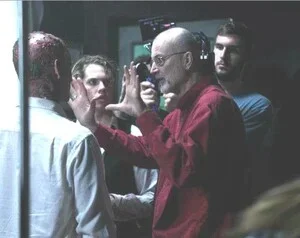
Photo courtesy of Peter D. Marshall.
Welcome to another edition of FilmPlatforms Industry Spotlight, our ongoing interview series featuring professionals from across the global film industry.
In each edition, we invite filmmakers, producers, distributors, sales agents, investors, film festivals, educators, and other industry professionals to share their real-world experience and insights.
In this edition, we're delighted to welcome Peter D. Marshall, film director, first assistant director, directing coach, educator, and author, whose career spans more than four decades across television dramas, documentaries, and film education. In this interview, Peter shares his thoughts on directing, leadership, preparation, collaboration, and the qualities that separate successful filmmakers from the rest.
1. For readers who may be meeting you for the first time, could you briefly introduce yourself in 2–3 sentences? Please tell us a little about your filmmaking journey and how you became a directing coach and the author of Making the Magic Happen: The Art and Craft of Film Directing.
I got my start in filmmaking at the age of sixteen, when my father gave me a Regular 8mm camera and a roll of film. My very first "movies" featured my three sisters swimming in our family lake, along with simple stop-motion animations of model race cars in my parents' basement.After graduating from a film program in Toronto, I spent more than a decade working in a wide variety of jobs including producing local television programs, directing educational films and documentaries, working as a production assistant on commercials, and even driving delivery trucks and planting trees—before landing my first major professional film job in 1985 as Second Assistant Director on the television series The Hitchhiker.
That opportunity led to my first First Assistant Director position, and a few years later I received my first directing opportunity while working on the CBS television series Wiseguy, where I was invited to direct two episodes.
Since then, I have directed more than thirty episodes of Canadian and American television drama, produced and directed documentaries and educational films, and have been fortunate to see my work receive international recognition. In 2006, I began teaching directing workshops, and over the years I've had the privilege of working with hundreds of filmmakers from around the world. That eventually led to writing Making the Magic Happen: The Art and Craft of Film Directing, bringing together many of the lessons I learned throughout my career.
2. You have worked as a director, first assistant director, producer, and directing coach for decades. In your opinion, what is the biggest misconception aspiring filmmakers have about what a film director actually does?
One of the biggest misconceptions is that the director is a solitary creative genius who sits in a chair making every decision alone.In reality, directing is far more about collaboration than control. A director must be a leader, communicator, problem solver, and someone who can bring together the work of dozens or sometimes hundreds of talented people behind a single creative vision.
It's an incredibly demanding role that requires balancing artistic decisions with practical realities while keeping the entire team focused, motivated, and moving in the same direction.
3. Throughout your career, you've worked with and mentored countless filmmakers. What qualities consistently separate directors who go on to build successful careers from those who struggle to move beyond their first few projects?
Successful directors understand that filmmaking is a team effort. They treat every department head as a creative partner and create an environment where talented people can do their best work.They know how to translate a script into visual storytelling, prepare thoroughly during pre-production, and arrive on set having already solved most of the potential problems. They understand what can realistically be accomplished each day, gather enough coverage to give the editor creative options, and pay close attention to what actually works rather than simply what was planned.
They also communicate effectively with actors by focusing on emotional objectives instead of simply giving line readings, and they're not afraid to adjust their approach when something isn't working. Above all, they remain flexible, collaborative, and committed to serving the story.
4. Your book Making the Magic Happen has become a valuable resource for many filmmakers. If you had to choose just three lessons that every first-time feature director should master, what would they be?
If I had to highlight three lessons for first-time feature directors, they would be these.First, prepare every scene thoroughly before shooting. The more work you do during pre-production, the more confidence and flexibility you'll have once you're on set.
Second, cast carefully. Strong performances often make the biggest difference between an average film and one that truly connects with audiences.
Finally, spend time rehearsing and blocking your actors. Clear communication, thoughtful preparation, and trust between the director and performers create stronger performances and a much smoother production.
5. Today's filmmakers often focus heavily on cameras, lenses, drones, and the latest technology. From your perspective, how important are technical skills compared to leadership, communication, and the ability to work with actors?
Many young directors today are fascinated by cameras, lenses, and the latest technology because those things are relatively easy to learn. You can study camera systems online, experiment with new equipment, and quickly improve your technical knowledge.What takes much longer is learning how to work with people.
Helping an actor deliver an honest performance, adapting when something isn't working, communicating your vision clearly, and leading a crew under pressure are skills that only develop through experience.
Technology will continue to evolve, but the ability to inspire confidence, solve problems, and bring out the best in people will always remain one of a director's greatest strengths.
6. Artificial intelligence is rapidly changing the filmmaking process. Which areas of directing do you believe AI can genuinely improve, and which aspects of directing should always remain deeply human?
Artificial intelligence is already transforming many parts of filmmaking, particularly in pre-production and post-production. It can improve planning, organization, scheduling, research, and many technical workflows, making production more efficient than ever before.However, I don't believe AI can replace the human side of directing.
A director's presence on set, emotional intelligence, instinct, and ability to build trust with actors cannot be replicated by technology. Great performances come from genuine human connection, empathy, and experience.
The role of AI will continue to evolve rapidly, but storytelling will always depend on people understanding people.
7. After teaching directing for many years through workshops and masterclasses, what are the most common mistakes you repeatedly see aspiring directors make, and how can they avoid them?
One of the biggest mistakes I see is that many directors spend more time thinking about equipment than storytelling and leadership. Great directing is about communicating a clear vision, working effectively with actors, and earning the trust of your crew.Another common mistake is waiting for the "perfect opportunity." The best way to improve is by making films, learning from every project, accepting mistakes, and continuing to develop both creatively and professionally.
Filmmaking is a long-term journey, and strong relationships often become just as valuable as technical ability.
8. Most independent filmmakers work with limited budgets, small crews, and tight schedules. What practical techniques can directors use to make a low-budget film feel far more cinematic and professional than it actually is?
A limited budget doesn't prevent a film from looking professional if the fundamentals are done well.Focus on strong storytelling, thoughtful shot composition, excellent sound, careful location selection, and thorough preparation before production begins. Good planning often creates more production value than expensive equipment.
Audiences are far more likely to forgive a modest budget than weak storytelling or unconvincing performances. A well-prepared director who works closely with a talented cast and crew can achieve remarkable results regardless of budget.
9. Finally, if you could give just one piece of advice to every filmmaker preparing to direct their first feature film something you genuinely wish someone had told you at the beginning of your own journey what would it be?
Cast experienced actors, hire crew members who know more than you do in their respective fields, and trust them to do their jobs.At the same time, never forget that as the director, you are ultimately responsible for everything that happens on set. Good leadership means giving talented people the freedom to excel while taking responsibility when things don't go according to plan.
10. Is there anything else you'd like to share with the FilmPlatforms community?
I continue to enjoy teaching directing and sharing practical filmmaking knowledge with directors at every stage of their careers.My advice is simple: never stop learning. Every production teaches something new, every challenge makes you a better filmmaker, and every project is another opportunity to grow as a storyteller, collaborator, and leader.
About Peter D. Marshall
Name: Peter D. MarshallPosition: Film Director, First Assistant Director, Directing Coach & Author
Country: Canada
Website: https://actioncutprint.com
IMDb: https://www.imdb.com/name/nm0551106/
LinkedIn: https://www.linkedin.com/in/peterdmarshall/
Book: Making the Magic Happen: The Art and Craft of Film Directing
We sincerely thank Peter D. Marshall for taking the time to share his experience and insights with the FilmPlatforms community.
Interested in being featured?
We regularly feature filmmakers, producers, distributors, sales agents, investors, film festival representatives, educators, and other film industry professionals from around the world.If you'd like to share your experience and insights with the FilmPlatforms community, we'd love to hear from you.
Get in touch with us to be featured in a future Industry Spotlight interview.
Last edited:


