Steven R. Mitchell

New member
Industry Professional
Joined
Aug 26, 2026
Messages
9
Hello, I’m Steven R. Mitchell, a Toronto-based producer and screenwriter with more than four decades of experience in the Canadian film and television industry.

I began my career as an editor, later moving into post-production supervision, story producing, series producing and creative leadership across hundreds of hours of scripted television, documentary and factual entertainment. My credits include The Littlest Hobo, My Secret Identity, Matrix, Youth & Crime: Beyond the Headlines, The Smart Woman’s Survival Guide and the Canadian Screen Award-winning Food Network series You Gotta Eat Here!

Today, my primary focus is developing original feature films and ambitious nonfiction projects for international audiences. My screenwriting moves between grounded history, mythology and folklore, elevated science fiction and darkly absurd worlds—always anchored by character, emotional truth, well researched worlds, and strong visual storytelling.

My current feature projects include Shadow in Hawthorn Bay, an award-winning young-adult period romance with supernatural and psychological elements, based on the acclaimed Canadian novel by Janet Lunn. Conceived as a Canada–UK co-production, the film is set in the Scottish Highlands and Upper Canada during the early 1800s. I am also developing The Clown Riots, a satirical historical dramedy inspired by the extraordinary true story of Toronto’s 1855 Circus Riot.

On the nonfiction side, I am developing Big Science, exploring the people and skilled workforces behind major scientific discovery, and Extreme Rituals, created in collaboration with leading anthropologist and cognitive scientist Dr. Dimitris Xygalatas.

I am currently represented by Stephan Dubreuil at Woolf + Lapin in Montréal.

I’m joining FilmPlatforms to connect with producers, financiers, sales agents, distributors and creative partners who are drawn to distinctive, internationally oriented storytelling. I look forward to discovering the work being developed here, sharing ideas and building relationships that may lead to meaningful collaborations.
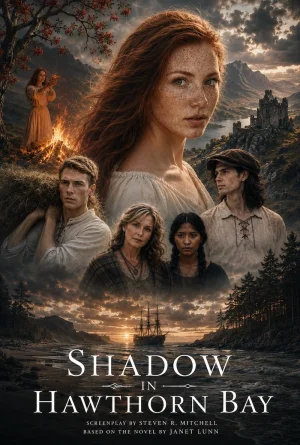
 

Attachments

  • Shadow In Hawthorn Bay - EPIC POSTER copy.webp
    Shadow In Hawthorn Bay - EPIC POSTER copy.webp
    208.6 KB · Views: 1
Hello, I’m Steven R. Mitchell, a Toronto-based producer and screenwriter with more than four decades of experience in the Canadian film and television industry.

I began my career as an editor, later moving into post-production supervision, story producing, series producing and creative leadership across hundreds of hours of scripted television, documentary and factual entertainment. My credits include The Littlest Hobo, My Secret Identity, Matrix, Youth & Crime: Beyond the Headlines, The Smart Woman’s Survival Guide and the Canadian Screen Award-winning Food Network series You Gotta Eat Here!

Today, my primary focus is developing original feature films and ambitious nonfiction projects for international audiences. My screenwriting moves between grounded history, mythology and folklore, elevated science fiction and darkly absurd worlds—always anchored by character, emotional truth, well researched worlds, and strong visual storytelling.

My current feature projects include Shadow in Hawthorn Bay, an award-winning young-adult period romance with supernatural and psychological elements, based on the acclaimed Canadian novel by Janet Lunn. Conceived as a Canada–UK co-production, the film is set in the Scottish Highlands and Upper Canada during the early 1800s. I am also developing The Clown Riots, a satirical historical dramedy inspired by the extraordinary true story of Toronto’s 1855 Circus Riot.

On the nonfiction side, I am developing Big Science, exploring the people and skilled workforces behind major scientific discovery, and Extreme Rituals, created in collaboration with leading anthropologist and cognitive scientist Dr. Dimitris Xygalatas.

I am currently represented by Stephan Dubreuil at Woolf + Lapin in Montréal.

I’m joining FilmPlatforms to connect with producers, financiers, sales agents, distributors and creative partners who are drawn to distinctive, internationally oriented storytelling. I look forward to discovering the work being developed here, sharing ideas and building relationships that may lead to meaningful collaborations.

Welcome to FilmPlatforms, Steven!

Great to have you here. Your background across so many areas of Canadian film and television, and your current focus on internationally oriented projects, should bring a really interesting perspective to the community.

Shadow in Hawthorn Bay and The Clown Riots both sound particularly interesting, and I hope you’ll share more about them as they develop.

Looking forward to seeing you in the discussions and following your work.

Best,
Zoltan
 
Hello, I’m Steven R. Mitchell, a Toronto-based producer and screenwriter with more than four decades of experience in the Canadian film and television industry.

I began my career as an editor, later moving into post-production supervision, story producing, series producing and creative leadership across hundreds of hours of scripted television, documentary and factual entertainment. My credits include The Littlest Hobo, My Secret Identity, Matrix, Youth & Crime: Beyond the Headlines, The Smart Woman’s Survival Guide and the Canadian Screen Award-winning Food Network series You Gotta Eat Here!

Today, my primary focus is developing original feature films and ambitious nonfiction projects for international audiences. My screenwriting moves between grounded history, mythology and folklore, elevated science fiction and darkly absurd worlds—always anchored by character, emotional truth, well researched worlds, and strong visual storytelling.

My current feature projects include Shadow in Hawthorn Bay, an award-winning young-adult period romance with supernatural and psychological elements, based on the acclaimed Canadian novel by Janet Lunn. Conceived as a Canada–UK co-production, the film is set in the Scottish Highlands and Upper Canada during the early 1800s. I am also developing The Clown Riots, a satirical historical dramedy inspired by the extraordinary true story of Toronto’s 1855 Circus Riot.

On the nonfiction side, I am developing Big Science, exploring the people and skilled workforces behind major scientific discovery, and Extreme Rituals, created in collaboration with leading anthropologist and cognitive scientist Dr. Dimitris Xygalatas.

I am currently represented by Stephan Dubreuil at Woolf + Lapin in Montréal.

I’m joining FilmPlatforms to connect with producers, financiers, sales agents, distributors and creative partners who are drawn to distinctive, internationally oriented storytelling. I look forward to discovering the work being developed here, sharing ideas and building relationships that may lead to meaningful collaborations.
Welcome to FilmPlatforms, Steven! Your experience across development, production, and screenwriting is impressive, and your current projects sound especially intriguing. I’d be glad to connect and learn more about Shadow in Hawthorn Bay and The Clown Riots. Looking forward to connecting and exploring potential opportunities to collaborate.
 
Welcome to FilmPlatforms, Steven!

Great to have you here. Your background across so many areas of Canadian film and television, and your current focus on internationally oriented projects, should bring a really interesting perspective to the community.

Shadow in Hawthorn Bay and The Clown Riots both sound particularly interesting, and I hope you’ll share more about them as they develop.

Looking forward to seeing you in the discussions and following your work.

Best,
Zoltan
Thank you Zoltán. I'm looking forward to contributing.
 
Welcome to FilmPlatforms, Steven! Your experience across development, production, and screenwriting is impressive, and your current projects sound especially intriguing. I’d be glad to connect and learn more about Shadow in Hawthorn Bay and The Clown Riots. Looking forward to connecting and exploring potential opportunities to collaborate.
Hello Hannah, I'd love to connect. As a new person, I'm not sure how that works - is there a button? LOL.
 
Hello Hannah, I'd love to connect. As a new person, I'm not sure how that works - is there a button? LOL.

Hi Steven,

Yes, there is 😊 Just click on the member’s username and select “Start direct message” to contact them privately.

If you ever need help finding your way around FilmPlatforms, feel free to ask.

Admin
 
Hello, I’m Steven R. Mitchell, a Toronto-based producer and screenwriter with more than four decades of experience in the Canadian film and television industry.

I began my career as an editor, later moving into post-production supervision, story producing, series producing and creative leadership across hundreds of hours of scripted television, documentary and factual entertainment. My credits include The Littlest Hobo, My Secret Identity, Matrix, Youth & Crime: Beyond the Headlines, The Smart Woman’s Survival Guide and the Canadian Screen Award-winning Food Network series You Gotta Eat Here!

Today, my primary focus is developing original feature films and ambitious nonfiction projects for international audiences. My screenwriting moves between grounded history, mythology and folklore, elevated science fiction and darkly absurd worlds—always anchored by character, emotional truth, well researched worlds, and strong visual storytelling.

My current feature projects include Shadow in Hawthorn Bay, an award-winning young-adult period romance with supernatural and psychological elements, based on the acclaimed Canadian novel by Janet Lunn. Conceived as a Canada–UK co-production, the film is set in the Scottish Highlands and Upper Canada during the early 1800s. I am also developing The Clown Riots, a satirical historical dramedy inspired by the extraordinary true story of Toronto’s 1855 Circus Riot.

On the nonfiction side, I am developing Big Science, exploring the people and skilled workforces behind major scientific discovery, and Extreme Rituals, created in collaboration with leading anthropologist and cognitive scientist Dr. Dimitris Xygalatas.

I am currently represented by Stephan Dubreuil at Woolf + Lapin in Montréal.

I’m joining FilmPlatforms to connect with producers, financiers, sales agents, distributors and creative partners who are drawn to distinctive, internationally oriented storytelling. I look forward to discovering the work being developed here, sharing ideas and building relationships that may lead to meaningful collaborations.

Hi Steven,

Shadow in Hawthorn Bay caught my attention. The combination of a historical setting with romance and supernatural elements sounds particularly interesting.

I’d love to hear a little more about the story itself. I’m also curious about how the early 1800s settings in Scotland and Canada play into the story, and how strongly the period setting and costume-drama elements shape the film.
 
Hi Lucas, thanks for your interest. There's a lot to unpack here.

Where does your interest come from, producer, screenwriter, director, etc.? Scottish? ;)
 
Last edited:
Hello, I’m Steven R. Mitchell, a Toronto-based producer and screenwriter with more than four decades of experience in the Canadian film and television industry.

I began my career as an editor, later moving into post-production supervision, story producing, series producing and creative leadership across hundreds of hours of scripted television, documentary and factual entertainment. My credits include The Littlest Hobo, My Secret Identity, Matrix, Youth & Crime: Beyond the Headlines, The Smart Woman’s Survival Guide and the Canadian Screen Award-winning Food Network series You Gotta Eat Here!

Today, my primary focus is developing original feature films and ambitious nonfiction projects for international audiences. My screenwriting moves between grounded history, mythology and folklore, elevated science fiction and darkly absurd worlds—always anchored by character, emotional truth, well researched worlds, and strong visual storytelling.

My current feature projects include Shadow in Hawthorn Bay, an award-winning young-adult period romance with supernatural and psychological elements, based on the acclaimed Canadian novel by Janet Lunn. Conceived as a Canada–UK co-production, the film is set in the Scottish Highlands and Upper Canada during the early 1800s. I am also developing The Clown Riots, a satirical historical dramedy inspired by the extraordinary true story of Toronto’s 1855 Circus Riot.

On the nonfiction side, I am developing Big Science, exploring the people and skilled workforces behind major scientific discovery, and Extreme Rituals, created in collaboration with leading anthropologist and cognitive scientist Dr. Dimitris Xygalatas.

I am currently represented by Stephan Dubreuil at Woolf + Lapin in Montréal.

I’m joining FilmPlatforms to connect with producers, financiers, sales agents, distributors and creative partners who are drawn to distinctive, internationally oriented storytelling. I look forward to discovering the work being developed here, sharing ideas and building relationships that may lead to meaningful collaborations.

The Clown Riots immediately stood out to me. Taking an event from 1855 and turning it into a satirical historical dramedy raises an interesting question from a development perspective: what makes this story resonate with an audience today?

Is there something in the social tensions, characters or circumstances surrounding the riot that you see as particularly relevant to the world we live in now, or is your intention primarily to immerse the audience in the absurdity of the historical event itself?
 
Hi Steven,

Shadow in Hawthorn Bay caught my attention. The combination of a historical setting with romance and supernatural elements sounds particularly interesting.

I’d love to hear a little more about the story itself. I’m also curious about how the early 1800s settings in Scotland and Canada play to
Hi Steven,

Shadow in Hawthorn Bay caught my attention. The combination of a historical setting with romance and supernatural elements sounds particularly interesting.

I’d love to hear a little more about the story itself. I’m also curious about how the early 1800s settings in Scotland and Canada play into the story, and how strongly the period setting and costume-drama elements shape the film.
L
into the story, and how strongly the period setting and costume-drama elements shape the film.

The Clown Riots immediately stood out to me. Taking an event from 1855 and turning it into a satirical historical dramedy raises an interesting question from a development perspective: what makes this story resonate with an audience today?

Is there something in the social tensions, characters or circumstances surrounding the riot that you see as particularly relevant to the world we live in now, or is your intention primarily to immerse the audience in the absurdity of the historical event itself?
Hello Norwest,

For clarity, my screenplay is a fictitious account of a true event in Toronto’s history.

Thank you. The historical absurdity is certainly one of the film’s great attractions, but it is the doorway into something much more contemporary.

What resonates with me is how quickly an almost farcical confrontation becomes a vessel for grievances that have been accumulating for generations. Toronto in 1855 is divided by religion, immigration, class, political allegiance and access to power. The clowns do not create those tensions; they merely provide the spark that allows everyone to act upon them.

As rumours spread, the city fractures into competing versions of the truth. To one group, the clowns are dangerous Catholic agitators; to another, they are innocent outsiders attacked by a Protestant establishment. People stop responding to what actually happened and begin responding to the version that confirms who they already fear and distrust. That feels strikingly relevant to a contemporary audience living amid political polarization, identity-based division, misinformation and the increasingly tribal interpretation of public events.

The film’s story is also about the failure—and, in some cases, deliberate self-interest—of civic institutions. Political leaders encourage a public spectacle as a distraction from underlying unrest, dismiss warnings because the event is profitable, and then search for an expendable individual when it descends into violence. Thomas Mercer (protagonist), an overlooked clerk who believes he has finally been entrusted with something important, discovers that he was valuable to those in power primarily because he could be blamed if anything went wrong. The historical setting allows us to explore institutional cowardice, political scapegoating and the management of public perception without turning the film into a direct allegory.

Chief Rourke (supporting) brings another contemporary dimension. As a Catholic who has concealed his identity to advance within a Protestant-controlled system, he embodies the personal cost of belonging to an institution that does not entirely accept him. His struggle over when to remain silent, when to intervene and how force should be used places the polarizing role of law enforcement at the centre of the story. The riot ultimately forces Toronto to reconsider how public order is maintained and who those institutions are designed to protect.

For me, the film’s central question is: how does a society that considers itself civilized suddenly give itself permission to descend into collective violence—and how do those responsible rewrite the story afterward?

The clowns make that question entertaining, cinematic and darkly funny. The audience can laugh at the image of a city tearing itself apart over a brothel brawl involving circus performers, rival firefighters and an insulted Orange Order. But beneath the spectacle is a recognizable story about belonging, grievance, tribal loyalty, and the ease with which humour becomes provocation once an audience begins to identify not jokes but allies and enemies.

That tension is the heart of the film. The absurdity draws us in; the uncomfortable recognition of ourselves is what I hope stays with us.

I hope that answers your question and provides more intrigue.
Steven
 
Hi Steven,

Shadow in Hawthorn Bay caught my attention. The combination of a historical setting with romance and supernatural elements sounds particularly interesting.

I’d love to hear a little more about the story itself. I’m also curious about how the early 1800s settings in Scotland and Canada play into the story, and how strongly the period setting and costume-drama elements shape the film.


Hi Steven,

Shadow in Hawthorn Bay caught my attention. The combination of a historical setting with romance and supernatural elements sounds particularly interesting.

I’d love to hear a little more about the story itself. I’m also curious about how the early 1800s settings in Scotland and Canada play into the story, and how strongly the period setting and costume-drama elements shape the film.
Hi Lucas, I'm learning my way around this platform and was not sure my initial response made it to you

Hi Lucas, thanks for your interest. There's a lot to unpack here. Where does your interest come from, producer, screenwriter, director, etc.? Scottish? ;)

I'm happy to discuss more if these replies are getting to you.
Best, Steven
 
Hello, I’m Steven R. Mitchell, a Toronto-based producer and screenwriter with more than four decades of experience in the Canadian film and television industry.

I began my career as an editor, later moving into post-production supervision, story producing, series producing and creative leadership across hundreds of hours of scripted television, documentary and factual entertainment. My credits include The Littlest Hobo, My Secret Identity, Matrix, Youth & Crime: Beyond the Headlines, The Smart Woman’s Survival Guide and the Canadian Screen Award-winning Food Network series You Gotta Eat Here!

Today, my primary focus is developing original feature films and ambitious nonfiction projects for international audiences. My screenwriting moves between grounded history, mythology and folklore, elevated science fiction and darkly absurd worlds—always anchored by character, emotional truth, well researched worlds, and strong visual storytelling.

My current feature projects include Shadow in Hawthorn Bay, an award-winning young-adult period romance with supernatural and psychological elements, based on the acclaimed Canadian novel by Janet Lunn. Conceived as a Canada–UK co-production, the film is set in the Scottish Highlands and Upper Canada during the early 1800s. I am also developing The Clown Riots, a satirical historical dramedy inspired by the extraordinary true story of Toronto’s 1855 Circus Riot.

On the nonfiction side, I am developing Big Science, exploring the people and skilled workforces behind major scientific discovery, and Extreme Rituals, created in collaboration with leading anthropologist and cognitive scientist Dr. Dimitris Xygalatas.

I am currently represented by Stephan Dubreuil at Woolf + Lapin in Montréal.

I’m joining FilmPlatforms to connect with producers, financiers, sales agents, distributors and creative partners who are drawn to distinctive, internationally oriented storytelling. I look forward to discovering the work being developed here, sharing ideas and building relationships that may lead to meaningful collaborations.

With more than four decades in film and television, is there anything about project development that you approach very differently today than you did twenty years ago?

I’m thinking less about changes in technology and more about whether your own view of what makes a story truly work has changed over the years.
 
With more than four decades in film and television, is there anything about project development that you approach very differently today than you did twenty years ago?

I’m thinking less about changes in technology and more about whether your own view of what makes a story truly work has changed over the years.
Hi George, thank you for your interest and question.

I think the biggest change is that twenty years ago I was more inclined to think in terms of creating a series of interesting events and then asking how my characters would react to them. Today, I tend to approach it almost the other way around.

I’m much more interested in having the events of the story grow out of the characters themselves—the choices they make, the things they fear, what they want, and particularly their flaws and strengths. Ideally, one decision creates the circumstances for the next, so the character isn’t simply being carried through the plot; they’re helping create it, sometimes without realizing it.

I also don’t lean as heavily anymore on established structural formulas—whether Syd Field, Robert McKee, or the idea that certain beats have to arrive at prescribed moments. I understand the value of those frameworks, and they were useful in learning how stories are constructed, but now I’m more inclined to let the structure emerge from the emotional journey of the characters: where I want them to begin, what has to happen to change them, and where I ultimately want them to arrive. The acts tend to develop naturally from that progression.

I’ve also become less interested in whether something is simply a clever or dramatic story beat and more interested in whether it reveals something about the character. After four decades of working with stories, I think I’ve come to believe that audiences may be attracted by the premise or the world you create, but ultimately they stay because they recognize something human in the people experiencing it.

So perhaps the biggest change is that I no longer see character, plot, and structure as separate things. At its best, character creates plot, plot creates pressure, and the structure grows out of the emotional journey that pressure produces.

I hope my answer is helpful on your journey.
Steven
 
Back
Top