Anderson-Mark-Ian

Member
Early-Career Professional
Joined
Sep 25, 2026
Messages
63
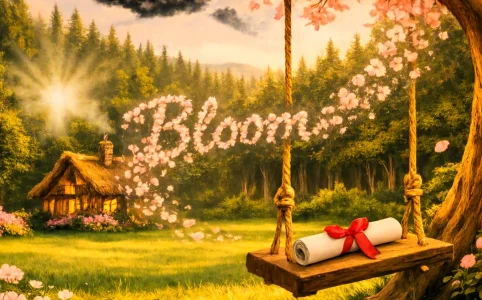
After many months of work, I'm pleased to say I've finally completed the book adaptation of Bloom.

One of the biggest lessons I learned throughout the process is that adaptation isn't about copying a story from one format to another. It's about finding the best way for that story to live and breathe within a different medium.

Interestingly, the novel contains a number of scenes that don't appear in the screenplay. While the film version relies on visuals, music, pacing and performance to communicate emotion, the book needed additional moments to explore character thoughts, relationships, motivations and aspects of the world that would otherwise remain beneath the surface.

These extra scenes weren't added to change the story. They were added to strengthen the reader's connection to the characters and create emotional depth that naturally comes through different storytelling tools than those available in film.

It's been a challenging but incredibly rewarding journey, and reaching the final page feels like a significant milestone in the ongoing development of Bloom.

I'm interested to hear from fellow creatives:

What's been the most difficult part of adapting an idea from one medium to another? Whether you've transformed a novel into a screenplay, a screenplay into a novel, or reimagined a story in an entirely different format, what challenge tested you the most, and what did it teach you as a storyteller?

Looking forward to hearing your experiences.
 

Attachments

  • Bloom - Title Image.webp
    Bloom - Title Image.webp
    247.8 KB · Views: 0
Congratulations on finishing Bloom. Completing a book adaptation is a real milestone, and your point about adaptation being about finding the right home for a story rather than copying it is spot on. To answer your question, the hardest part for me is always translating interiority. A novel can sit inside a character's head for pages. A screenplay has to show that same thought through behavior, subtext and choices. The lesson it taught me is that every scene has to earn its place, and that what you cut often matters as much as what you keep.

I'm a professional screenwriter and script editor. I work across drama, thriller, sci-fi and action, and I've done feature screenplays, TV pilots and adaptations. I also handle formatting to industry standard, so your pages read as professional to producers, agents and contests.

Since you now have both a novel and a screenplay, here are a few questions about what hasn't been done yet:
  1. Is the screenplay at final draft stage, or does it still need a polish for structure, pacing and dialogue?
  2. Now that the novel contains scenes the screenplay doesn't, do you want the two versions aligned, or kept deliberately different?
  3. Do you have a logline, one-page synopsis and pitch deck? Those are what open doors with producers.
  4. Have you registered the work (WGA or copyright) to protect both the book and the screenplay?
  5. Is there a series version in mind, such as a TV pilot and season outline, or is this strictly a feature?
  6. What's your goal: contests, selling to a producer, or producing it yourself?
I'd love to help you take Bloom from finished draft to market-ready, whether that's a script edit, a polish, a pilot or series adaptation, or packaging materials. If you'd like, send me the script or a few pages and tell me your budget range. I'll propose a clear scope with a fixed price, so you know exactly what you're getting before we start.

Looking forward to hearing more about the project.
After many months of work, I'm pleased to say I've finally completed the book adaptation of Bloom.

One of the biggest lessons I learned throughout the process is that adaptation isn't about copying a story from one format to another. It's about finding the best way for that story to live and breathe within a different medium.

Interestingly, the novel contains a number of scenes that don't appear in the screenplay. While the film version relies on visuals, music, pacing and performance to communicate emotion, the book needed additional moments to explore character thoughts, relationships, motivations and aspects of the world that would otherwise remain beneath the surface.

These extra scenes weren't added to change the story. They were added to strengthen the reader's connection to the characters and create emotional depth that naturally comes through different storytelling tools than those available in film.

It's been a challenging but incredibly rewarding journey, and reaching the final page feels like a significant milestone in the ongoing development of Bloom.

I'm interested to hear from fellow creatives:

What's been the most difficult part of adapting an idea from one medium to another? Whether you've transformed a novel into a screenplay, a screenplay into a novel, or reimagined a story in an entirely different format, what challenge tested you the most, and what did it teach you as a storyteller?

Looking forward to hearing your experiences.
 
Congratulations on finishing Bloom. Completing a book adaptation is a real milestone, and your point about adaptation being about finding the right home for a story rather than copying it is spot on. To answer your question, the hardest part for me is always translating interiority. A novel can sit inside a character's head for pages. A screenplay has to show that same thought through behavior, subtext and choices. The lesson it taught me is that every scene has to earn its place, and that what you cut often matters as much as what you keep.

I'm a professional screenwriter and script editor. I work across drama, thriller, sci-fi and action, and I've done feature screenplays, TV pilots and adaptations. I also handle formatting to industry standard, so your pages read as professional to producers, agents and contests.

Since you now have both a novel and a screenplay, here are a few questions about what hasn't been done yet:
  1. Is the screenplay at final draft stage, or does it still need a polish for structure, pacing and dialogue?
  2. Now that the novel contains scenes the screenplay doesn't, do you want the two versions aligned, or kept deliberately different?
  3. Do you have a logline, one-page synopsis and pitch deck? Those are what open doors with producers.
  4. Have you registered the work (WGA or copyright) to protect both the book and the screenplay?
  5. Is there a series version in mind, such as a TV pilot and season outline, or is this strictly a feature?
  6. What's your goal: contests, selling to a producer, or producing it yourself?
I'd love to help you take Bloom from finished draft to market-ready, whether that's a script edit, a polish, a pilot or series adaptation, or packaging materials. If you'd like, send me the script or a few pages and tell me your budget range. I'll propose a clear scope with a fixed price, so you know exactly what you're getting before we start.

Looking forward to hearing more about the project.
Thank you for taking the time to read the post and for such a thoughtful reply. I particularly agree with your point regarding interiority. That was one of the biggest challenges during the adaptation process, especially when deciding which moments needed to remain internal within the novel and which had to be shown through action, dialogue, and character choices within the screenplay.

To answer your questions:

The screenplay has recently completed a Phase 1 pass with a script editor and is currently in a considerably stronger place than when I first began writing it, While there will always be room for future refinement, I am presently concentrating on packaging and presentation rather than further major screenplay revisions.

In terms of alignment, I intentionally allow differences between the novel and screenplay. I view them as two versions of the same story designed for different audiences and different mediums rather than direct copies of one another.

I currently have a logline, synopsis materials, screenplay, soundtrack, concept artwork, and supporting development materials. My immediate focus is on obtaining a short proof-of-concept animation which I believe will help demonstrate the project’s potential more effectively.

The work is protected through copyright ownership only at present (UK), and I take IP protection very seriously. Registering it however, is definitely on the cards.

At present, Bloom is intended as a feature- length animated musical. While I’ve considered wider possibilities, my primary focus is on giving the feature version the strongest foundation possible.

My current objective is producer engagement and eventual production. Like many independent creators, I am building the project incrementally and learning each stage along the way.

I should also be transparent that I am currently developing the project on an equity-only basis due to personal financial circumstances. As a result, I am not presently in a position to engage paid consultancy, editing, or development services. My current efforts are focused on collaboration, networking, learning, and continuing to strengthen the package until circumstances allow for additional investment.

Nevertheless, I appreciate your questions and wish you every success with your own screenwriting and editing work.

Kind regards,

Mark
 
Thank you for taking the time to read the post and for such a thoughtful reply. I particularly agree with your point regarding interiority. That was one of the biggest challenges during the adaptation process, especially when deciding which moments needed to remain internal within the novel and which had to be shown through action, dialogue, and character choices within the screenplay.

To answer your questions:

The screenplay has recently completed a Phase 1 pass with a script editor and is currently in a considerably stronger place than when I first began writing it, While there will always be room for future refinement, I am presently concentrating on packaging and presentation rather than further major screenplay revisions.

In terms of alignment, I intentionally allow differences between the novel and screenplay. I view them as two versions of the same story designed for different audiences and different mediums rather than direct copies of one another.

I currently have a logline, synopsis materials, screenplay, soundtrack, concept artwork, and supporting development materials. My immediate focus is on obtaining a short proof-of-concept animation which I believe will help demonstrate the project’s potential more effectively.

The work is protected through copyright ownership only at present (UK), and I take IP protection very seriously. Registering it however, is definitely on the cards.

At present, Bloom is intended as a feature- length animated musical. While I’ve considered wider possibilities, my primary focus is on giving the feature version the strongest foundation possible.

My current objective is producer engagement and eventual production. Like many independent creators, I am building the project incrementally and learning each stage along the way.

I should also be transparent that I am currently developing the project on an equity-only basis due to personal financial circumstances. As a result, I am not presently in a position to engage paid consultancy, editing, or development services. My current efforts are focused on collaboration, networking, learning, and continuing to strengthen the package until circumstances allow for additional investment.

Nevertheless, I appreciate your questions and wish you every success with your own screenwriting and editing work.

Kind regards,

Mark
Thank you for being so open about where things stand. I appreciate it, and it's clear you're building Bloom the right way, one solid stage at a time.

A few thoughts that cost nothing and may help as you move toward producer engagement:
  1. Protect the work before sharing it. UK copyright is automatic, but proving when you created something matters if a dispute arises. A dated registration, such as the WGA registry, which accepts international works, gives you a clear record. It's inexpensive, and I'd do it before the proof-of-concept animation goes out to any animators or collaborators.
  2. Use NDAs and written agreements. Anyone helping with the animation should sign something confirming you own the underlying IP, especially if their work is equity or deferred-pay based.
  3. Lead with the proof-of-concept. For an animated musical, producers respond to a strong short clip with the soundtrack attached far more than to pages alone. Your plan to focus there makes sense.
  4. Keep your package tight. A one-page pitch sheet, a short deck with concept art, and a clear statement of what you're looking for (producer, financing, or animation studio) will make outreach much easier.
I work on a paid basis, so I can't take on Bloom right now. But if you reach a point where you'd like a targeted, fixed-price service, such as a pitch deck review or a read of the opening act before it goes to producers, I'd be glad to scope something small that fits your budget.

Best of luck with the animation. I'd love to see how it turns out.
 
Thank you for being so open about where things stand. I appreciate it, and it's clear you're building Bloom the right way, one solid stage at a time.

A few thoughts that cost nothing and may help as you move toward producer engagement:
  1. Protect the work before sharing it. UK copyright is automatic, but proving when you created something matters if a dispute arises. A dated registration, such as the WGA registry, which accepts international works, gives you a clear record. It's inexpensive, and I'd do it before the proof-of-concept animation goes out to any animators or collaborators.
  2. Use NDAs and written agreements. Anyone helping with the animation should sign something confirming you own the underlying IP, especially if their work is equity or deferred-pay based.
  3. Lead with the proof-of-concept. For an animated musical, producers respond to a strong short clip with the soundtrack attached far more than to pages alone. Your plan to focus there makes sense.
  4. Keep your package tight. A one-page pitch sheet, a short deck with concept art, and a clear statement of what you're looking for (producer, financing, or animation studio) will make outreach much easier.
I work on a paid basis, so I can't take on Bloom right now. But if you reach a point where you'd like a targeted, fixed-price service, such as a pitch deck review or a read of the opening act before it goes to producers, I'd be glad to scope something small that fits your budget.

Best of luck with the animation. I'd love to see how it turns out.
Thank you for taking the time to provide such a detailed and thoughtful response.

The points around registration, written agreements and IP protection are particularly helpful and definitely things I’m taking seriously as the project moves towards a proof-of-concept stage.

I also agree with your observation about the importance of leading with visuals. The screenplay, world-building, music, and development materials have given Bloom a strong foundation. But I recognise that the proof-of-concept animation is likely to be the key piece that bridges the gap between concept and producer engagement.

I appreciate your encouragement and your practical advice. It’s genuinely valuable to hear from people with experience in this area, and I’ll certainly keep your offer in mind as the project progresses.

Thank you again for your support.

Mark
 
Back
Top