Awards & Festivals
Global film festivals and awards where filmmakers, cinema, and the film industry meet.

admin

Administrator
Staff member
Industry Professional
Joined
Dec 17, 2025
Messages
54
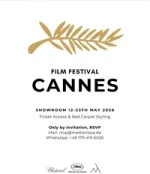
festivaldecannes from 12-23th may 2026 in south France.webp

🎟️
Cannes Film Festival 2026

📍 Location
Cannes, France

🗓️ Event Dates
May 12–23, 2026

🎬 Event Type
Film Festival

📚 Focus / Categories
International cinema, auteur-driven films, artistic filmmaking, world premieres, international co-productions, independent cinema, and major global productions.

🎯 Who It’s For
Filmmakers, directors, producers, screenwriters, distributors, sales agents, film market professionals, critics, journalists, and international film industry representatives.

📝 Event Description
The Cannes Film Festival is one of the most prestigious and influential film festivals in the world. Held annually on the French Riviera, it showcases a curated selection of films from both renowned directors and emerging filmmakers, often serving as the launchpad for major international releases and award-winning cinema.

The festival is best known for its Official Competition, where selected films compete for the festival’s highest honor, the Palme d'Or.
In addition to the main competition, Cannes features several important sections including Un Certain Regard, Cannes Premiere, Midnight Screenings, Directors’ Fortnight, and Critics’ Week, highlighting innovative storytelling and new voices in global cinema.
Beyond film screenings, Cannes is also a central meeting point for the international film industry, where filmmakers, distributors, and buyers connect to premiere films, secure distribution deals, and establish global partnerships.


📅 Submission / Participation Info
Films must be submitted through the official Cannes submission platform and must generally be world premieres or international premieres depending on the section.
Industry professionals and press must apply for official festival accreditation to attend screenings, press conferences, and industry events.


💰 Fees / Accreditation
Submission fees depend on the film category and submission deadline.
Accreditation fees vary based on professional status (industry, press, filmmaker, or market participant).


🌐 Official Website
Submission fees depend on the film category and submission deadline.
Accreditation fees vary based on professional status (industry, press, filmmaker, or market participant).
🎬 Associated Film Market
Marché du Film – Cannes Film Market 2026
Industry dates: May 12–21, 2026
 
Last edited:
Some early information about the 2026 Cannes edition is already known.
The jury president will be acclaimed South Korean director Park Chan-wook, internationally recognized for films such as Oldboy and Decision to Leave.
Alongside the festival, the Marché du Film will also take place, which is one of the largest film industry markets in the world, where producers, distributors, streaming platforms and sales agents meet to present new projects and secure international distribution deals.
I will also be attending this year. Although I don’t have a new film premiering at the festival, I will be present at the film market, which is always a great opportunity to meet industry professionals, discuss projects and build new collaborations.
The official competition lineup is usually announced only a few weeks before the festival, but industry speculation often mentions potential new works from directors such as Paul Thomas Anderson, Luca Guadagnino, Yorgos Lanthimos and Chloé Zhao.
The full lineup will be announced in spring 2026 by the official organizers of the Cannes Film Festival.
 
Park Chan-wook as Jury President is the ultimate signal for 2026. It’s not just a nod to South Korea; it’s a demand for visual unapologeticism. Park is the king of "Extreme Elegance," and his appointment tells every filmmaker in the competition that if your film looks like a high-end TV pilot with safe, flat lighting, you can forget the Palme d'Or. He is going to hunt for (The Frame.)
The real battle this year isn't on the red carpet; it’s in the Marché du Film distribution wars. We are seeing a massive shift where "cinematic texture" is becoming the primary currency for independent sales. Buyers are tired of the sterile, "VFX-safe" look of streamers; they are looking for films that dare to use shadow as a narrative tool.
If you are heading to the Croisette, keep your eyes on the Lanthimos buzz and the Korean Pavilion. With Park at the helm, the Korean slate is going to be the most aggressive we’ve seen in a decade. If you’re looking for co-production partners who aren't afraid of bold, high-contrast storytelling, that’s where you need to be.
The (Grand Prix) for any indie filmmaker in 2026 isn't just a trophy it’s surviving the logistics of the Palais without losing your creative soul to a distribution deal that demands "more clarity" in the shadows.
Question for the group: Do you think Park’s baroque, highly-stylized sensibilities will favor the big-budget auteur epics, or will he surprise us by awarding a stripped-back, raw piece of neorealism that relies entirely on natural light?

See you at the Petit Majestic.
 
Park Chan-wook as Jury President is the ultimate signal for 2026. It’s not just a nod to South Korea; it’s a demand for visual unapologeticism. Park is the king of "Extreme Elegance," and his appointment tells every filmmaker in the competition that if your film looks like a high-end TV pilot with safe, flat lighting, you can forget the Palme d'Or. He is going to hunt for (The Frame.)
The real battle this year isn't on the red carpet; it’s in the Marché du Film distribution wars. We are seeing a massive shift where "cinematic texture" is becoming the primary currency for independent sales. Buyers are tired of the sterile, "VFX-safe" look of streamers; they are looking for films that dare to use shadow as a narrative tool.
If you are heading to the Croisette, keep your eyes on the Lanthimos buzz and the Korean Pavilion. With Park at the helm, the Korean slate is going to be the most aggressive we’ve seen in a decade. If you’re looking for co-production partners who aren't afraid of bold, high-contrast storytelling, that’s where you need to be.
The (Grand Prix) for any indie filmmaker in 2026 isn't just a trophy it’s surviving the logistics of the Palais without losing your creative soul to a distribution deal that demands "more clarity" in the shadows.
Question for the group: Do you think Park’s baroque, highly-stylized sensibilities will favor the big-budget auteur epics, or will he surprise us by awarding a stripped-back, raw piece of neorealism that relies entirely on natural light?

See you at the Petit Majestic.

Samantha, you’ve pinpointed the new industry currency: cinematic texture. While Park Chan-wook’s presidency signals a return to visual unapologeticism, it creates a tension with current market liquidity. Buyers at the Marché du Film are increasingly risk-averse, often favoring "VFX-safe" lighting that scales across mobile platforms, despite the growing demand for bold, independent storytelling.
To answer your question: I expect Park to favor narrative necessity over pure style. He won't just award a (stripped-back) film for its minimalism; he will hunt for the one that uses light or the lack of it as a non-negotiable storytelling tool. The real "Grand Prix" for 2026 filmmakers is securing a Tier-1 distribution deal without sacrificing those deep shadows to "optimized for streaming" requirements.
Question for the group: Are you seeing a genuine return to 16mm/35mm stocks in your 2026 co-production circles to achieve this texture, or is the industry still relying on post-production emulation to satisfy both Park’s eye and the distributors' metrics?

See you at the Croisette!
 
Samantha, you’ve pinpointed the new industry currency: cinematic texture. While Park Chan-wook’s presidency signals a return to visual unapologeticism, it creates a tension with current market liquidity. Buyers at the Marché du Film are increasingly risk-averse, often favoring "VFX-safe" lighting that scales across mobile platforms, despite the growing demand for bold, independent storytelling.
To answer your question: I expect Park to favor narrative necessity over pure style. He won't just award a (stripped-back) film for its minimalism; he will hunt for the one that uses light or the lack of it as a non-negotiable storytelling tool. The real "Grand Prix" for 2026 filmmakers is securing a Tier-1 distribution deal without sacrificing those deep shadows to "optimized for streaming" requirements.
Question for the group: Are you seeing a genuine return to 16mm/35mm stocks in your 2026 co-production circles to achieve this texture, or is the industry still relying on post-production emulation to satisfy both Park’s eye and the distributors' metrics?

See you at the Croisette!

Michael that’s a really sharp way to frame it especially the idea of narrative necessity over pure style because that’s exactly where the tension seems to be right now. What I’m starting to notice more and more is that “cinematic texture” is no longer just an aesthetic choice but almost a negotiation point between creators and buyers.
On one side you have filmmakers pushing for visual identity something that actually separates their film from the endless stream of content and on the other side you have distributors thinking in terms of clarity compression and platform performance.
And somewhere in between those two is where most projects either evolve or get flattened.
On the 16mm / 35mm question I’d say there is definitely a symbolic return but in practice it still feels very selective not so much a widespread shift but more of a positioning too.
Shooting on film today sends a signal before anyone even watches the project it says this is intentional this is authored this is not designed to blend in. But at the same time a lot of buyers don’t necessarily care how the texture is achieved as long as the result works within their delivery frameworks. So in reality we’re seeing two parallel approaches some projects are genuinely going back to physical formats to build identity others are engineering that same feeling in post but still optimizing for flexibility.

Which brings up an interesting question for 2026.

Do you think buyers are actually valuing the origin of the image more now or just the final result as long as it fits both artistic and platform expectations.
Because that difference could quietly shape how projects are developed long before they even reach Cannes.
 
Michael that’s a really sharp way to frame it especially the idea of narrative necessity over pure style because that’s exactly where the tension seems to be right now. What I’m starting to notice more and more is that “cinematic texture” is no longer just an aesthetic choice but almost a negotiation point between creators and buyers.
On one side you have filmmakers pushing for visual identity something that actually separates their film from the endless stream of content and on the other side you have distributors thinking in terms of clarity compression and platform performance.
And somewhere in between those two is where most projects either evolve or get flattened.
On the 16mm / 35mm question I’d say there is definitely a symbolic return but in practice it still feels very selective not so much a widespread shift but more of a positioning too.
Shooting on film today sends a signal before anyone even watches the project it says this is intentional this is authored this is not designed to blend in. But at the same time a lot of buyers don’t necessarily care how the texture is achieved as long as the result works within their delivery frameworks. So in reality we’re seeing two parallel approaches some projects are genuinely going back to physical formats to build identity others are engineering that same feeling in post but still optimizing for flexibility.

Which brings up an interesting question for 2026.

Do you think buyers are actually valuing the origin of the image more now or just the final result as long as it fits both artistic and platform expectations.
Because that difference could quietly shape how projects are developed long before they even reach Cannes.

Samantha, this is an exceptionally well-articulated observation especially framing texture as a negotiation layer rather than a purely aesthetic choice. That tension you’re describing really does seem to sit at the core of how projects are being shaped right now.
To your question, I’d argue that buyers are still primarily evaluating the final result but increasingly reacting to signals of intentionality that are difficult to fabricate. The origin of the image may not always be a formal requirement, yet it often leaves a trace in the overall coherence of the film. When a project commits early to a visual approach whether through format, lighting philosophy, or production design it tends to inform every creative decision downstream. That level of alignment is hard to fully replicate in post.
What’s emerging, in my view, is not necessarily a widespread return to analog formats, but a growing sensitivity to whether texture is embedded in the filmmaking process or applied as a finishing layer. Both can achieve strong visual results, but they don’t always carry the same narrative weight. And I think that difference is becoming more visible to both programmers and buyers, even if it’s not always explicitly acknowledged.
If anything, this could start influencing decisions much earlier at development stage rather than in post — especially for projects aiming to position themselves distinctly in markets like Cannes. Because at that level, texture isn’t just about image quality, it becomes part of how a film communicates authorship and intent.
Really curious to see how this plays out at this year’s Marché whether buyers begin to lean more toward projects with that built-in visual identity, or continue prioritizing flexibility and platform optimization.
 
Back
Top