Industry Spotlight David Zannoni – The Business Behind Independent Film

admin

Administrator
Staff member
Industry Professional
Joined
Dec 17, 2025
Messages
119

David Zannoni – The Business Behind Independent Film​

What happens to a film's revenues after distribution, and how can producers ensure that investors, rights holders and other participants receive their agreed shares?

In this edition of FilmPlatforms Industry Spotlight, we speak with David Zannoni, an international film business consultant with nearly two decades of experience and involvement in more than 300 film, television and animation productions.

Drawing on his expertise in Collection Account Management, international financing and distribution, David shares practical insights into the financial realities of independent filmmaking, common mistakes producers should avoid, and why understanding the business behind a film is just as important as bringing it to the screen.
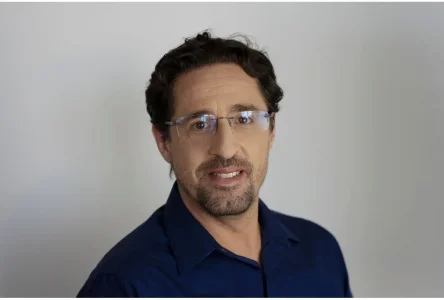

David_Zannoni.webp


1. Please introduce yourself to our community in 3–4 sentences. What are you currently working on, and how would you describe your role within the international film industry?

I am an international film business consultant with almost two decades of experience and have been involved in more than 300 film, television and animation productions, primarily across the United States, Europe and Latin America. A major part of my career has been dedicated to Collection Account Management (CAM), film & TV revenue management, and so-called waterfalls (also called recoupment schedules) for independent film productions, and nowadays I do so in my role as North America consultant for Freeway Entertainment, nowadays the leading global provider of CAM services. Through Zannoni Media, I also advise producers and companies on the business and legal side of production, co-production, financing, international distribution and business development. Education is another important part of what I do: I have been deeply involved in international film education and professional development, particularly through my work with Stage 32 and film-industry organizations such as CANACINE in Mexico, where I previously served as president of the delegation of the State of Quintana Roo and today serve as a senior advisor.


2. Looking back on your career, was there a defining moment or decision that fundamentally shaped your journey in the international film industry?

Absolutely. The defining moment was entering the film industry in 2007 and starting to work in Collection Account Management and international royalty and revenue administration.

CAM gave me a rather unique way of learning the film business because you are looking at a film not only as a creative project, but as an international business involving producers, financiers, sales agents, distributors, talent, talent agencies, lawyers, banks and lenders, and many other stakeholders. You see the contracts, the financing structure, the distribution arrangements and, eventually, how the revenues actually flow and how everybody recoups.

That experience became the foundation for almost everything I have done since. Over the years my work has expanded into consulting focused on production and co-production structures, financing, business and legal affairs, international sales and distribution, and executive producing, but CAM has always remained my core area of expertise. Since 2023, I have been doing this work as North America consultant for Freeway Entertainment.

Another defining decision was to build my career internationally rather than around one particular territory. Working extensively between Europe, the United States, Mexico and Latin America has shaped how I understand the industry and how I approach almost every transaction today.


3. You have worked on more than 300 film, television, and animation productions in an international environment. From your perspective, what have been the biggest changes on the business side of the independent film industry over the past 10–15 years, and which trends do producers need to adapt to the most today?

The independent film financing and distribution model has become much more fragmented. Fifteen years ago, international pre-sales and traditional distribution agreements played a more predictable role in financing many independent films. The same goes for the importance of U.S. domestic/theatrical distribution for films relying on major talent. Those mechanisms still exist, but they have become a lot less predictable, and producers today need to combine many more pieces. Primarily, tax incentives have become an essential part of film financing and hence, where films are being shot.

At the same time, the growth of streaming has fundamentally changed distribution and the way content is monetized. That makes it even more important for producers to understand exactly what rights they are granting, what revenues they are entitled to, how those revenues will be collected, and how the recoupment waterfall works.

This is also where my CAM experience influences my perspective. Financing a film is only one side of the equation. Producers need to think about the entire financial life cycle of the project: how it is financed, how rights are licensed, where revenues are paid, how they are reported, and how the different participants are ultimately paid. Ultimately, this circles back to budgeting and what a film project costs in order for it to be able to get made.

I think the producers who adapt best are those who combine creative ambition with a strong understanding of finance, contracts, distribution and revenue management, and who start thinking about all of these elements early on in the process, starting essentially at the development stage, rather than after the film has already been produced.

Related FilmPlatforms discussion: Why Are So Many “Fully Packaged” Films Still Failing to Get Financed in 2026?


4. Many independent producers focus primarily on making a great film, while business planning often receives less attention. Based on your experience, what are the most common mistakes producers make when it comes to financing, international sales, or royalty management?

One of the biggest mistakes is treating the business structure as something that can be dealt with later. By the time a film reaches production, many important decisions have already been made through financing agreements, co-production agreements, sales agreements, talent agreements and other contracts.

From a CAM perspective, I regularly see how important it is that the underlying agreements and deal terms, the financing structure, the distribution potential, the recoupment waterfall and the actual collection mechanisms are aligned. This is not easy; it is rather complex, but essential to make sure that the production anticipates and keeps the whole circle — from development to financing, production to distribution, and thereafter recoupment — aligned.

This is also why I believe it is extremely important for an independent producer to retain an experienced entertainment lawyer early in the process. An entertainment lawyer can assist throughout the entire life cycle of the project, starting with the underlying intellectual property and chain of title, and continuing through development, production, financing and distribution. Just as importantly, the lawyer can help ensure that the different agreements are consistent with one another and that the recoupment waterfall correctly reflects the relevant deal terms agreed between the production, financiers, talent, sales agent and the other parties participating in the revenues of the film. From my CAM perspective, that alignment is crucial: ultimately, the waterfall needs to translate all those individual contractual arrangements into a coherent structure for the allocation and distribution of revenues.

Another common mistake is concentrating on raising the production budget without thinking sufficiently about how the film will reach the market and generate revenues. Financing and distribution should not be treated as completely separate conversations.

My advice is therefore to build the financial, legal, distribution and revenue-management architecture of a project as early as possible. A good CAM structure is part of that. It provides an independent mechanism through which revenues can be collected and allocated according to the agreements between the parties, and it can create transparency and confidence among producers, financiers, sales agents and other participants.

Related FilmPlatforms discussion: After the Pitch Deck: How to Turn Investor Interest Into Film Financing


5. Drawing on your experience in international sales, royalty management, and production financing, what advice would you give to producers who want to build a stable and sustainable production company for the long term, rather than simply moving from one project to the next?

Make sure that the creative processes and business side are in sync. A sustainable production company needs relationships, infrastructure, knowledge and a long-term strategy. That means developing ongoing relationships with financiers, sales agents, distributors, lawyers, accountants, collection account managers, production service providers and co-production partners rather than assembling an entirely new network for every project. Also, you have to understand the global landscape, both for production (tax incentives, shooting locations, cost assessment, foreign talent) and distribution (commercial value of your film in other territories, how sales happen).

It also means understanding your company's rights and assets. Producers should know what they own, what they have licensed, what revenues may continue to come in from older productions and what value exists in their library. Good accounting and revenue management become increasingly important as the company grows.


6. Having worked on productions across Europe, Latin America, and the United States, what makes a project truly attractive to international sales agents, co-production partners, and investors during the development stage, before production even begins?

The honest answer is that there is no one-way success formula. Different partners are looking for different things; some are focused on creative success, and others on recouping investment, for example. Maybe one can say that a balanced project needs to make sense both creatively and commercially.

From the business side, I'd say that a viable project shows: a realistic budget, credible financing plan, well-developed production structure, clear distribution potential, and a team capable of executing it.

It is also important to understand that a sales agent, a co-producer and an investor are evaluating the same project from different perspectives. The sales agent is thinking about international marketability and distribution potential; the co-producer is looking at what each partner and territory contributes and whether the project qualifies under local requirements; and an investor or lender will focus heavily on risk, recoupment and the reliability of the underlying financing and revenue sources.

The producer needs to understand those different perspectives and be able to explain the project accordingly. That preparation makes a significant difference when you start approaching international partners.

Related FilmPlatforms discussion: Sales Agents From a Producer’s Perspective


7. In addition to your work as a consultant and producer, you are also an educator on Stage 32. Why do you believe it is important for film professionals to continuously develop not only their creative skills but also their business knowledge?

Because filmmaking is both an art and a business, and one cannot function sustainably without the other.

A filmmaker does not need to become a lawyer, accountant, sales agent or collection account manager. But producers and other film professionals should understand the basic principles of financing, contracts, distribution, recoupment, revenue management and international markets. That knowledge allows them to ask better questions and to surround themselves with the right specialists.

This has been one of the aspects I have particularly enjoyed about my work with Stage 32: helping make areas such as film finance, international production and distribution, and my own expertise, Collection Account Management, understandable and practical for filmmakers around the world.

For me, education is not separate from the industry. It is part of building a stronger and more professional international film ecosystem. The industry changes continuously, so professional education should continue throughout your career.


8. Looking back on your career, what do you believe has contributed most to building a successful international career? Which personal qualities or decisions have had the greatest impact on your journey, and if you could give just one piece of advice to those hoping to follow a similar path, what would it be?

Eagerness to learn, building relationships, understanding the global audiovisual ecosystem, and an international mindset have been the most important elements.

I have always been interested in understanding how the different parts of the film business connect. Starting in Collection Account Management exposed me to virtually every participant in the financial and commercial life of a film. Instead of remaining within that one specialization, I tried to understand the world around it: production, financing, contracts, sales, distribution, co-production and, increasingly, the institutional and educational side of the industry.

Working internationally has been equally important. Different countries have very different ways of financing and producing films, but ultimately this is a relationship business. Building trust over many years, and maintaining relationships even when there is no immediate transaction, has been essential to my career.

If I had to give only one piece of advice, it would be: focus on becoming specialized and nurturing your skills. Build your network, learn as much as possible about all the dynamics of the global film and TV business, and never stop learning.

That combination of specialization and curiosity creates opportunities that you often could not have planned in advance.


Connect with David Zannoni​

Zannoni Media
Website: https://zannonimedia.com/

David Zannoni on LinkedIn
https://www.linkedin.com/in/davidzannoni

David Zannoni on IMDb
https://www.imdb.com/name/nm4976223/


Interested in being featured?​

FilmPlatforms Industry Spotlight features filmmakers, producers, distributors, sales agents, investors, festival professionals, and other voices from across the global film industry.

If you have experience, insights, or a story that could be valuable to the filmmaking community, we’d love to hear from you.

Get in touch to be considered for an upcoming Industry Spotlight.
 
Last edited:

David Zannoni – The Business Behind Independent Film​

What happens to a film's revenues after distribution, and how can producers ensure that investors, rights holders and other participants receive their agreed shares?

In this edition of FilmPlatforms Industry Spotlight, we speak with David Zannoni, an international film business consultant with nearly two decades of experience and involvement in more than 300 film, television and animation productions.

Drawing on his expertise in Collection Account Management, international financing and distribution, David shares practical insights into the financial realities of independent filmmaking, common mistakes producers should avoid, and why understanding the business behind a film is just as important as bringing it to the screen.


View attachment 331


1. Please introduce yourself to our community in 3–4 sentences. What are you currently working on, and how would you describe your role within the international film industry?

I am an international film business consultant with almost two decades of experience and have been involved in more than 300 film, television and animation productions, primarily across the United States, Europe and Latin America. A major part of my career has been dedicated to Collection Account Management (CAM), film & TV revenue management, and so-called waterfalls (also called recoupment schedules) for independent film productions, and nowadays I do so in my role as North America consultant for Freeway Entertainment, nowadays the leading global provider of CAM services. Through Zannoni Media, I also advise producers and companies on the business and legal side of production, co-production, financing, international distribution and business development. Education is another important part of what I do: I have been deeply involved in international film education and professional development, particularly through my work with Stage 32 and film-industry organizations such as CANACINE in Mexico, where I previously served as president of the delegation of the State of Quintana Roo and today serve as a senior advisor.


2. Looking back on your career, was there a defining moment or decision that fundamentally shaped your journey in the international film industry?

Absolutely. The defining moment was entering the film industry in 2007 and starting to work in Collection Account Management and international royalty and revenue administration.

CAM gave me a rather unique way of learning the film business because you are looking at a film not only as a creative project, but as an international business involving producers, financiers, sales agents, distributors, talent, talent agencies, lawyers, banks and lenders, and many other stakeholders. You see the contracts, the financing structure, the distribution arrangements and, eventually, how the revenues actually flow and how everybody recoups.

That experience became the foundation for almost everything I have done since. Over the years my work has expanded into consulting focused on production and co-production structures, financing, business and legal affairs, international sales and distribution, and executive producing, but CAM has always remained my core area of expertise. Since 2023, I have been doing this work as North America consultant for Freeway Entertainment.

Another defining decision was to build my career internationally rather than around one particular territory. Working extensively between Europe, the United States, Mexico and Latin America has shaped how I understand the industry and how I approach almost every transaction today.


3. You have worked on more than 300 film, television, and animation productions in an international environment. From your perspective, what have been the biggest changes on the business side of the independent film industry over the past 10–15 years, and which trends do producers need to adapt to the most today?

The independent film financing and distribution model has become much more fragmented. Fifteen years ago, international pre-sales and traditional distribution agreements played a more predictable role in financing many independent films. The same goes for the importance of U.S. domestic/theatrical distribution for films relying on major talent. Those mechanisms still exist, but they have become a lot less predictable, and producers today need to combine many more pieces. Primarily, tax incentives have become an essential part of film financing and hence, where films are being shot.

At the same time, the growth of streaming has fundamentally changed distribution and the way content is monetized. That makes it even more important for producers to understand exactly what rights they are granting, what revenues they are entitled to, how those revenues will be collected, and how the recoupment waterfall works.

This is also where my CAM experience influences my perspective. Financing a film is only one side of the equation. Producers need to think about the entire financial life cycle of the project: how it is financed, how rights are licensed, where revenues are paid, how they are reported, and how the different participants are ultimately paid. Ultimately, this circles back to budgeting and what a film project costs in order for it to be able to get made.

I think the producers who adapt best are those who combine creative ambition with a strong understanding of finance, contracts, distribution and revenue management, and who start thinking about all of these elements early on in the process, starting essentially at the development stage, rather than after the film has already been produced.

Related FilmPlatforms discussion: Why Are So Many “Fully Packaged” Films Still Failing to Get Financed in 2026?


4. Many independent producers focus primarily on making a great film, while business planning often receives less attention. Based on your experience, what are the most common mistakes producers make when it comes to financing, international sales, or royalty management?

One of the biggest mistakes is treating the business structure as something that can be dealt with later. By the time a film reaches production, many important decisions have already been made through financing agreements, co-production agreements, sales agreements, talent agreements and other contracts.

From a CAM perspective, I regularly see how important it is that the underlying agreements and deal terms, the financing structure, the distribution potential, the recoupment waterfall and the actual collection mechanisms are aligned. This is not easy; it is rather complex, but essential to make sure that the production anticipates and keeps the whole circle — from development to financing, production to distribution, and thereafter recoupment — aligned.

This is also why I believe it is extremely important for an independent producer to retain an experienced entertainment lawyer early in the process. An entertainment lawyer can assist throughout the entire life cycle of the project, starting with the underlying intellectual property and chain of title, and continuing through development, production, financing and distribution. Just as importantly, the lawyer can help ensure that the different agreements are consistent with one another and that the recoupment waterfall correctly reflects the relevant deal terms agreed between the production, financiers, talent, sales agent and the other parties participating in the revenues of the film. From my CAM perspective, that alignment is crucial: ultimately, the waterfall needs to translate all those individual contractual arrangements into a coherent structure for the allocation and distribution of revenues.

Another common mistake is concentrating on raising the production budget without thinking sufficiently about how the film will reach the market and generate revenues. Financing and distribution should not be treated as completely separate conversations.

My advice is therefore to build the financial, legal, distribution and revenue-management architecture of a project as early as possible. A good CAM structure is part of that. It provides an independent mechanism through which revenues can be collected and allocated according to the agreements between the parties, and it can create transparency and confidence among producers, financiers, sales agents and other participants.

Related FilmPlatforms discussion: After the Pitch Deck: How to Turn Investor Interest Into Film Financing


5. Drawing on your experience in international sales, royalty management, and production financing, what advice would you give to producers who want to build a stable and sustainable production company for the long term, rather than simply moving from one project to the next?

Make sure that the creative processes and business side are in sync. A sustainable production company needs relationships, infrastructure, knowledge and a long-term strategy. That means developing ongoing relationships with financiers, sales agents, distributors, lawyers, accountants, collection account managers, production service providers and co-production partners rather than assembling an entirely new network for every project. Also, you have to understand the global landscape, both for production (tax incentives, shooting locations, cost assessment, foreign talent) and distribution (commercial value of your film in other territories, how sales happen).

It also means understanding your company's rights and assets. Producers should know what they own, what they have licensed, what revenues may continue to come in from older productions and what value exists in their library. Good accounting and revenue management become increasingly important as the company grows.


6. Having worked on productions across Europe, Latin America, and the United States, what makes a project truly attractive to international sales agents, co-production partners, and investors during the development stage, before production even begins?

The honest answer is that there is no one-way success formula. Different partners are looking for different things; some are focused on creative success, and others on recouping investment, for example. Maybe one can say that a balanced project needs to make sense both creatively and commercially.

From the business side, I'd say that a viable project shows: a realistic budget, credible financing plan, well-developed production structure, clear distribution potential, and a team capable of executing it.

It is also important to understand that a sales agent, a co-producer and an investor are evaluating the same project from different perspectives. The sales agent is thinking about international marketability and distribution potential; the co-producer is looking at what each partner and territory contributes and whether the project qualifies under local requirements; and an investor or lender will focus heavily on risk, recoupment and the reliability of the underlying financing and revenue sources.

The producer needs to understand those different perspectives and be able to explain the project accordingly. That preparation makes a significant difference when you start approaching international partners.

Related FilmPlatforms discussion: Sales Agents From a Producer’s Perspective


7. In addition to your work as a consultant and producer, you are also an educator on Stage 32. Why do you believe it is important for film professionals to continuously develop not only their creative skills but also their business knowledge?

Because filmmaking is both an art and a business, and one cannot function sustainably without the other.

A filmmaker does not need to become a lawyer, accountant, sales agent or collection account manager. But producers and other film professionals should understand the basic principles of financing, contracts, distribution, recoupment, revenue management and international markets. That knowledge allows them to ask better questions and to surround themselves with the right specialists.

This has been one of the aspects I have particularly enjoyed about my work with Stage 32: helping make areas such as film finance, international production and distribution, and my own expertise, Collection Account Management, understandable and practical for filmmakers around the world.

For me, education is not separate from the industry. It is part of building a stronger and more professional international film ecosystem. The industry changes continuously, so professional education should continue throughout your career.


8. Looking back on your career, what do you believe has contributed most to building a successful international career? Which personal qualities or decisions have had the greatest impact on your journey, and if you could give just one piece of advice to those hoping to follow a similar path, what would it be?

Eagerness to learn, building relationships, understanding the global audiovisual ecosystem, and an international mindset have been the most important elements.

I have always been interested in understanding how the different parts of the film business connect. Starting in Collection Account Management exposed me to virtually every participant in the financial and commercial life of a film. Instead of remaining within that one specialization, I tried to understand the world around it: production, financing, contracts, sales, distribution, co-production and, increasingly, the institutional and educational side of the industry.

Working internationally has been equally important. Different countries have very different ways of financing and producing films, but ultimately this is a relationship business. Building trust over many years, and maintaining relationships even when there is no immediate transaction, has been essential to my career.

If I had to give only one piece of advice, it would be: focus on becoming specialized and nurturing your skills. Build your network, learn as much as possible about all the dynamics of the global film and TV business, and never stop learning.

That combination of specialization and curiosity creates opportunities that you often could not have planned in advance.


Connect with David Zannoni​

Zannoni Media
Website: https://zannonimedia.com/

David Zannoni on LinkedIn
https://www.linkedin.com/in/davidzannoni

David Zannoni on IMDb
https://www.imdb.com/name/nm4976223/


Interested in being featured?​

FilmPlatforms Industry Spotlight features filmmakers, producers, distributors, sales agents, investors, festival professionals, and other voices from across the global film industry.

If you have experience, insights, or a story that could be valuable to the filmmaking community, we’d love to hear from you.

Get in touch to be considered for an upcoming Industry Spotlight.

One of the biggest challenges in the independent film industry today is that signing a distribution agreement doesn't necessarily mean the money will arrive when expected.

From a business perspective, I've seen how delayed payments, a lack of transparency in financial reporting, and difficulties in actually collecting revenues can create serious problems, even when the agreement itself appears perfectly reasonable on paper.

I believe this is an area that deserves much more attention, particularly among independent producers entering the international film distribution market for the first time.

David, based on your experience, are producers becoming more aware of these risks before signing agreements, or is revenue management still something many only start taking seriously once problems arise?
 
One recurring challenge in independent film financing is the reliance on overly optimistic international sales projections without sufficient market validation.

David, in your experience, how often do these assumptions undermine otherwise promising projects, and at what stage should producers bring in a sales agent to establish a more realistic commercial outlook?
 
Back
Top