
- Joined
- Dec 17, 2025
- Messages
- 113
Industry Spotlight: Saibal Ray — From Poetry and Literature to Independent Filmmaking
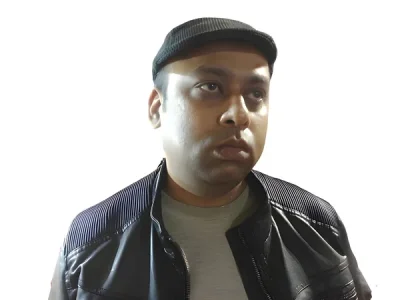
Twelve published books, a journey through filmmaking and education, and a documentary screened at international film festivals. Indian writer, filmmaker, and producer Saibal Ray has built his creative career around storytelling in its many forms.
From writing poetry in his childhood to studying filmmaking and eventually directing his own documentary, Ray's journey has been shaped by observation, personal experience, and a determination to explore stories beyond conventional formulas.
Now developing his feature film project INFATUATION, he faces a challenge familiar to many independent filmmakers: finding the right producer and financing while preserving his creative vision.
In this edition of FilmPlatforms Industry Spotlight, Saibal Ray shares his thoughts on writing, filmmaking, pitching to producers, festival experiences, and the realities of bringing an independent project to life.
1. For readers discovering you for the first time, could you briefly introduce yourself and tell us how your journey into writing and filmmaking began?
I started writing at a very early age. It was mainly because of my childhood education and training. My parents and teachers always encouraged my writing as they discovered that I have a habit of creative writing.
I started with poems. In my high school days I had a crush on a girl, who was my very close friend. But I was shy to express my love to her mainly because of two reasons – I was worried about my future, and I was kind of an introvert.
This does not mean I wrote only love poems in this period. I wrote other types of poems too, getting inspired by the teachings of my parents and teachers. During this period I wrote a few short stories that I lost in the course of time.
Later, after shifting to the city of Kolkata from my hometown Mathabhanga, I started writing again as a refuge in the lonely city. This is the first time I wrote a full-length feature script just to test whether I could write a cinematic story or not, as I had a habit of time-passing in the cheap theatres of this city.
Eventually, after doing my bachelor's degree in physics, I joined a national film school, as I had cracked the admission test.
In the meantime, I got associated with a Bengali little magazine and translated a few articles for them. Also, I wrote another novel before joining the film school. The rest of my books were written during my film education and film-related jobs afterwards.
When I was teaching at a university, I made a documentary to teach the students about professional filmmaking. This documentary was my first professional venture as a director and producer, though I had worked on many other projects before as a crew member and otherwise.
However, this documentary has been shown in many international festivals so far with awards and accolades.
2. You've published twelve books across several forms. How do you decide whether an idea should become a book, a screenplay, or eventually a film?
Any idea can be made into movies provided you have the training, merit and budget. For me it takes time.
My two poetry collections are compilations of poems written over a period of almost four decades. But for prose it depends. It takes time to cook the idea in my brain. Once the idea is formed, I sit with a pen and paper to sketch the outline. Then I start writing.
You can say writing is a mechanical process for me. It can take one month to one year to finish a draft depending on the span of the subject.
It always depends on how research-friendly the environment around me is. Because for prose writing, research is an important element.
By 'research' I don't mean going through the book and internet only. My memory, experience and observation are all parts of the research arrangements that I need to write.
However, the basic idea about the form of the cinema is necessary. It is true for all other art forms too. And for film writers, it is necessary to know about the differences between cinema and other art forms.
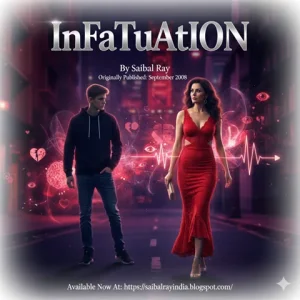
3. You're currently seeking producers and investors for INFATUATION. What has been the biggest challenge in moving the project from screenplay toward production?
The biggest challenge is, of course, getting the fund. I have been sending mail after mail for the last one month to the production companies in India and around the globe.
Now, I am awaiting their responses. Also, I am looking for a producer who would allow my creative freedom.
4. What have you learned about finding and approaching the right producers and investors? What actually helps get their attention?
There are mainly two types of producers – first, the ones who go by the market trends, and second, the ones who want to invest in something new.
I am looking for the second type, who would like to invest in a film that is not a copy or collage of the movies happening around these days.
INFATUATION is an abstract projection of my childhood and the journey of my life.
5. How important are the pitch, pitch deck and overall presentation when seeking film financing? What do you think filmmakers often get wrong at this stage?
Pitch decks are very important for the filmmakers who do not have relatives or godfathers in the industry.
However, there are many filmmakers who may want to approach production companies otherwise. But for me it is very important to have a plan on paper first, as it saves both money and time.
While creating a pitch deck, filmmakers should focus on economy of words. The pitch deck must be concise, precise and attractive without moving away from the main idea of the film.
Related FilmPlatforms discussion: After the Pitch Deck: How to Turn Investor Interest Into Film Financing
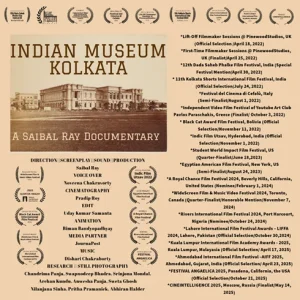
6. One of your documentaries has screened at eighteen festivals worldwide. What did that experience teach you about festival strategy, and what advice would you give filmmakers submitting their first film?
There is no festival strategy. While making the film, I never thought of any festivals. I concentrated on the form of the film.
As a result, it became attractive and engaging to the audience. After completion of the film, I started searching for festivals that would fit my film in.
However, I am grateful to all the festivals that showed and awarded my film, as it gave me a little bit of fame, which feels good in the crowd.
7. From your international experience, what helps a culturally specific story connect with audiences around the world without losing its identity?
That's a very interesting question.
Culture-specific stories must find two types of audiences first, the ones who love to know about different cultures, i.e., the culture-curious audiences; and second, the ones who have a similar lifestyle irrespective of their cultural differences, i.e., culturally identified audiences.
However, for movie buffs all good movies are okay. The only thing is one has to find a way to reach them.
8. What advice would you give a filmmaker who has a finished screenplay and a strong project but doesn't know how to find the producer, financing or industry connections needed to get it made?
There is no other way but to keep trying.
If you have the right mixture of talent, creativity and training, someone shall definitely find you.
Just don't be hopeless.
Related community projects: STEVEN — Seeking Producer & Financing and ABIEYUWA — Seeking a Lead Producer and Line Producer
9. Is there a recent project, film, book, or initiative you'd particularly like to share with the FilmPlatforms community?
All my books are written and edited with utmost care. However, my personal favourites are ORANGE and 4K.
Connect with Saibal Ray

Website: https://saibalrayindia.blogspot.com/
IMDb: https://www.imdb.com/name/nm14942732/
LinkedIn: https://www.linkedin.com/in/saibalray/
Join the Discussion
Saibal's experience raises an important question for independent filmmakers: how do you find the right producer without compromising the creative vision that makes your project unique?@BarryM @Ikenna — you're both developing projects and looking for production partners. Have you faced similar challenges? What has been the most difficult part of finding the right people to bring your stories to the screen?
We'd love to hear from other filmmakers and producers in the FilmPlatforms community as well.
FilmPlatforms would like to thank Saibal Ray for sharing his experiences and perspectives with our international filmmaking community.


