Mark S. Berry – From Platinum Records to Film Financing and Global Distribution
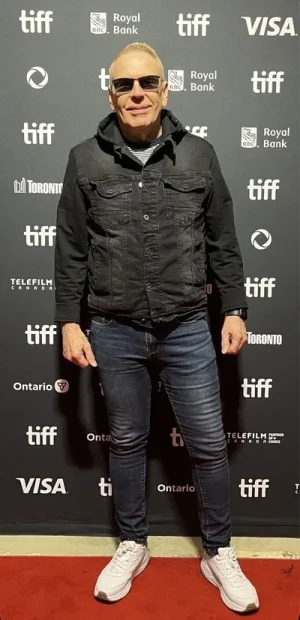
For more than five decades, Mark S. Berry has worked across music, film, and television, building a career that has taken him from London's AIR Studios and collaborations with artists including Paul McCartney, David Bowie, Carly Simon, Duran Duran, and Billy Idol to film development, financing, production, and global distribution.
As Chairman of AMG – Music, Film & Television, Berry oversees a business whose film and television division, AMG Visuals, works across the full project lifecycle. In this Industry Spotlight, he discusses the changing realities of independent film financing, what investors are looking for today, common mistakes producers make when packaging projects, the importance of protecting IP, and where he sees new opportunities emerging for independent filmmakers.
1. Please briefly introduce yourself and AMG Visuals, and tell us how your journey in the film industry led to creating the company's film division.
My name is Mark S. Berry, Chairman of AMG – Music, Film & Television. My career started in the music industry over five decades ago beginning as a recording engineer at AIR Studios in London under the tutelage of Sir George Martin and going on to earn 36 international gold and platinum records working with artists like Paul McCartney, Carly Simon, David Bowie, Duran Duran, Billy Idol, and many more. In 1998, I founded AMG as an independent media company with seed capital from Canadian film giant Alliance Atlantis's music publishing division.
Naturally, working on film soundtracks, score synchronization, and licensing opened my eyes to the structural synergies between music and motion pictures. We launched AMG Visuals as our dedicated film and television division to handle complete project lifecycles: development, co-production, financing, and global distribution. Expanding from managing master recordings to producing feature films, documentaries, and live event features was the logical next step.
2. AMG Visuals is involved in film development, production, financing, and distribution. From your perspective, what are the biggest challenges independent producers face today when moving a project from development to production?
The biggest obstacle today is the collapse of traditional pre-sales and gap financing models, combined with market saturation. Historically, an indie producer could package a script with a recognizable lead and pre-sell foreign territories to cover 50–70% of the budget. Today, international buyers are extremely risk-averse, streamer buyers are tightening licensing budgets, and minimum guarantees (MGs) have shrunk dramatically.
The challenge isn't just raising the money; it's assembling a capital stack—tax credits, debt, equity, and pre-sales that doesn't leave the production over-leveraged before a single frame is shot.
3. You're currently working on a major film project about the legendary 1971 Muhammad Ali vs. Joe Frazier championship fight at Madison Square Garden. Without revealing any confidential details, what attracted you to this story, and what makes it such a compelling project?
What draws me to the 1971 "Fight of the Century" isn't just the sport it's the cultural, political, and deeply human collision that occurred inside and outside Madison Square Garden. You had two unbeaten heavyweights who represented completely opposing political and social dynamics in Vietnam-era America.
It's a story about perception, pride, and the psychological weight carried by both fighters. Joe Frazier was an extraordinary, humble powerhouse who fought out of the shadow of Ali's massive cultural persona. Capturing that era's raw, unvarnished tension where sports, race, politics, and celebrity culture intersected for 15 historic roundsmakes it a timeless story that resonates globally.
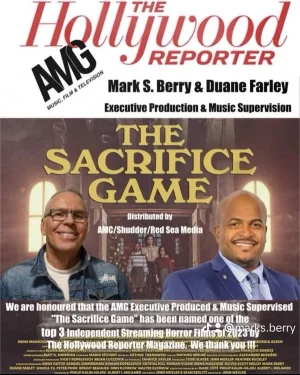
4. Securing financing remains one of the biggest obstacles for independent filmmakers. In today's market, what separates projects that successfully attract investors from those that struggle to get financed?
Investors aren't funding "movies"; they are investing in risk-mitigated assets. The projects that get funded today demonstrate three distinct characteristics:
De-risked Capital Stacks: They don't ask investors to cover 100% of the budget in pure equity. They bring local tax incentives, soft money, pre-committed brands, or attached distribution paths to the table first.
Realistic Recoupment Waterfalls: The team clearly outlines how and when investors get paid back, prioritizing investor equity return before producers take backend fees.
Clear Audience & Distribution Positioning: The producers can answer, "Who is buying this on opening weekend, and on which platform does it live?" with hard data rather than wishful thinking.
5. Many producers believe that a great screenplay is enough to secure financing. Based on your experience, what are the most common mistakes you see in pitch decks, business plans, or investor presentations? What advice would you give to producers looking to convince investors to back their projects?
The most common mistake is creating a fan deck instead of a commercial proposal. Screenplays are creative blueprints, but pitch decks are financial tools.
Common flaws include:
Unrealistic Financial Comparables: Listing $100M+ studio blockbusters as "comps" for a $3M indie drama.
Ignoring the Cost of Capital: Failing to budget for sales agent fees, legal expenses, completion bonds, and financing fees.
Overestimating Cast Value: Assuming a recognizable actor automatically guarantees sales, without checking their current international territory value.
My Advice: Treat your investor pitch like a venture capital proposal. Lead with the story's emotional hook, but spend equal energy proving you know how to protect their principal investment through tax rebates, pre-sales, and disciplined execution.
6. Looking back at your career, what have been the most valuable lessons you've learned that every independent producer should know?
Protect the IP: Own your underlying rights, options, and chain of title unequivocally. If your legal foundation is messy, institutional capital will walk away immediately.
Music & Delivery Costs Will Bite You: Coming from the music side, I see indie filmmakers constantly underestimate music licensing fees or post-production delivery schedules. Budget your clearing and delivery costs early.
Relationships Over Deals: The entertainment business is a long game. Preserving trust with sales agents, lenders, and crew pays compound interest over decades.
7. Looking ahead, how do you see the film industry evolving over the next five to ten years? Which trends, technologies, or business models do you believe will create the greatest opportunities for independent filmmakers?
We are seeing a shift toward hybrid distribution and direct-to-fan monetization. The middle-tier theatrical model is tough, but hyper-targeted digital models, FAST channels (Free Ad-Supported TV), and specialized SVOD services are creating sustainable micro-ecosystems.
Technologically, virtual production (LED volumes) and ethical AI pre-visualization will drastically reduce physical production overhead for indie filmmakers, allowing small budgets to deliver massive visual scope. The greatest opportunity lies with producers who build direct relationships with their niche audiences rather than relying strictly on legacy studio gatekeepers.
8. Are you currently working on any other projects, or is there anything else you'd like to share with the FilmPlatforms community?
Alongside our flagship drama and sports feature slates, AMG Visuals continues to expand our documentary and music-driven film roster, following projects like Drake: Homecoming and the Jeff Healey Band features. We are actively packaging upcoming feature films and developing reality/unscripted television concepts alongside our international co-production partners in the US, Canada, and Asia.
To the FilmPlatforms community: focus on your packaging as much as your writing. The industry is always hungry for great storytelling, but the filmmakers who understand both the creative frame and the balance sheet are the ones who get their movies made.
About Mark S. Berry
Name: Mark S. BerryPosition: Chairman, AMG – Music, Film & Television
Company: AMG Visuals, Ltd
Website: www.amg-visuals.com / www.theamgcorp.com
IMDb: Mark S. Berry
LinkedIn: Mark S. Berry
Interested in being featured?
FilmPlatforms Industry Spotlight showcases filmmakers, producers, distributors, sales agents, investors, festival professionals, and other voices from across the global film industry.If you'd like to share your story, experience, and insights with our international filmmaking community, we'd love to hear from you.
Get in touch to be featured in an upcoming Industry Spotlight.


