
- Joined
- Dec 17, 2025
- Messages
- 109
Mike Blum on Independent Animation, Financing & the Future of the Industry
The owner of Pipsqueak Animation discusses international co-productions, what buyers are looking for, building audiences independently, and how AI could reshape animation.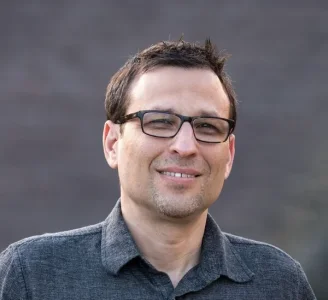
Animation has never been an easy business, but today’s independent producers are navigating an especially challenging mix of cautious buyers, difficult financing and a rapidly changing production landscape.
For this Industry Spotlight, we spoke with Mike Blum, owner of Pipsqueak Animation, about what it takes to develop and finance independent animation today, how international co-productions can open new doors, building an audience outside the traditional studio system, and where AI may take the industry next.
Drawing on decades of experience in animation, Mike offers a practical look at what creators and producers are actually facing in the market right now.
1. Please briefly introduce yourself and Pipsqueak Animation, and tell us how children’s and family content became an important part of your work.
My name is Mike Blum, and I’m the owner of Pipsqueak Animation. We’re a full-service animation studio with both a work-for-hire business and an original development side.
On the service side, we’ve worked on series including BoJack Horseman for Netflix, Cyanide & Happiness, and Secret Chef for Hulu, but we specialize in short-form animation: commercials, branded content, interstitials, and other special projects. We’ve produced well over 100 animated films for StoryCorps and have also worked with clients including American Airlines, ABCmouse, Comedy Central, Cartoon Network, MTV, Wise Potato Chips, and The Lincoln Project.
On the original side, we’ve had development deals with Cartoon Network, Disney, and Lion Forge Animation. We created Fifi: Cat Therapist and Get My Goat for Peacock Kids, Samurai! Daycare for SMOSH, and several shorts for Sesame Street. We also produced a series from the ground up with The Simpsons director David Silverman called Super Slackers. And we continually produce original content for our own YouTube channel, Barkster Kid Songs.
Most of what we’ve developed has been family-friendly or aimed at children, although that has partly reflected what buyers were looking for. Samurai! Daycare was not really a kids’ show, Super Slackers definitely wasn’t, and the project we developed with Lion Forge was intended more for prime time.
That said, as a parent, I genuinely love children’s content. Kids are a wonderful audience, and I find it a joy to create work for them.
2. You're currently developing Grounded and speaking with international co-production partners. How important are international co-productions for independent animated films today, and what makes a project attractive to potential partners?
Right now, it is unbelievably difficult to set up anything, let alone an original animated feature. That’s a worldwide problem, but the U.S. is probably at the epicenter of it. Even American buyers are increasingly looking to reduce their risk through co-productions, acquisitions, tax incentives, and other financing structures.
The good news is that there is a whole world outside the handful of traditional U.S. buyers, and many international companies approach development and financing differently. It is still terribly challenging, but we would rather increase our odds by talking to dozens of potential partners than pitch the two or three places in the U.S. that might be buying, get a pass, and pack it in.
As for what makes a project attractive, unfortunately, the number one, two, and three things most buyers want right now are recognizable IP. And that doesn’t mean a comic book that sold 500 copies. They want properties with a substantial existing audience.
For independent producers who don’t have the money or connections to secure a major property, I see two viable alternatives. One is to develop a genuinely original take on public-domain IP. We did that on the series side and now have a co-development deal with the French studio TeamTO. The other is to create an original concept that is distinctive, marketable, and immediately understandable from the logline. If it takes ten minutes to explain why the idea is interesting, you’re already in trouble.
3. Many independent filmmakers dream of producing an animated feature, but few understand the challenges involved. What have been the biggest lessons you've learned throughout the development of Grounded, and what advice would you give to others pursuing a similar project?
I don’t want to get ahead of ourselves because we are still trying to set Grounded up. But I worked at Disney Feature Animation for almost 12 years, and I’ve drawn heavily on that experience in developing our strategy.
The first lesson is that the creative has to be excellent. There are literally hundreds of projects competing for the same small pool of buyers, financiers, and partners. You need a great script, refined visuals, a compelling pitch deck, and, increasingly, some kind of teaser or proof of concept. All of that takes a tremendous amount of time, effort, and usually money.
My advice is not to give up, but also not to fool yourself into believing you have gold before you’ve road-tested the idea. Get high-quality feedback. If you’re early in your career and don’t yet have a network of experienced professionals, that may mean paying for it. But trusted friends and colleagues who understand story and the marketplace can also be extremely valuable.
Don’t look for a pat on the back. Look for people who will tell you what isn’t working. Then make the project better. Do that over and over until the major notes disappear and the remaining reactions become smaller and more subjective. That is when you are ready to start taking it to the industry.
4. You're also working on a new animated series with a French co-production partner. Without revealing any confidential details, what have you learned about building successful international creative partnerships, and what makes a co-production truly work?
Part of the reason we’ve made progress is that we try to remain very aware of the market and develop properties that are built to sell. We think original takes on public-domain material are a strong starting point. For younger audiences, concepts with organic play patterns can also be helpful. Regardless of the age group, the core idea needs to be instantly understandable.
But a successful co-production also requires more than a good concept. The partners need to bring complementary strengths and be honest about what each side is contributing and what each side expects in return. That includes creative development, financing, production capabilities, distribution relationships, access to incentives, and territory rights.
You also need clarity about roles. Who has creative authority? Who is leading the pitch? Who is responsible for which materials? What happens if one partner wants to move forward and the other doesn’t? Those conversations are not always fun, but having them early is much better than discovering later that everyone thought they had made a different deal.
Ultimately, the best co-productions feel like both companies are making the project stronger, not simply dividing up ownership.
5. Barkster Kid Songs has grown to more than 10,000 subscribers and over 5 million views on YouTube. What strategies have contributed most to its growth, and what advice would you give to creators hoping to build a successful audience for children's content?
I could probably write a short book about everything we’ve learned. But if I had to boil it down, I would say: don’t expect instant success.
Choose a niche and a production style that allow you to make a tremendous amount of content consistently. Try to make that content better than what your direct competitors are producing. Study thumbnails and learn how to make yours more clickable without misrepresenting the video. And build your production strategy around reuse: Shorts, compilations, sing-along versions, re-edits, and other formats can all help you get more value from the same underlying material.
Collaborations have also been important for us. Find larger or complementary channels that share your audience and create something that genuinely benefits both sides. The emphasis should be on making a good piece of content together, not simply borrowing someone else’s subscribers.
And be patient. Our growth has come from producing, testing, learning, and improving over several years. There was no single magic video or trick that suddenly changed everything.
6. Independent animation projects often require years of development before reaching production. How challenging is it to secure financing or attract investors in today's market, and what advice would you give to producers preparing to pitch an animated project?
It is amazingly challenging. Buyers, financiers, and distributors are extremely cautious right now, and you should assume that almost every answer will be no.
That means you need to understand what the market is looking for and spend an enormous amount of time making sure your project and presentation are as strong as possible. Even when someone passes, you want the pitch to be good enough that they respect the work and want to hear your next idea.
If you don’t yet have a major track record, consider partnering with creators, producers, or companies that make the overall package stronger. Don’t attach people just to collect names. Every partner should provide a real value-add, whether that is creative experience, financing, production infrastructure, distribution relationships, or access to decision-makers.
Those partnerships will require you to give something up. That’s how it works. Don’t become so determined to hold onto 100% of your creation that no one else ever gets to see it. One hundred percent of zero is still zero.
7. The animation industry is evolving rapidly with new technologies, including AI-assisted tools. Which developments do you believe will have the biggest impact on independent animation over the next five to ten years?
AI is definitely going to change what all of us do. It already is.
I believe we can and should keep artists at the center of the creative process. But pipelines are going to change, and artists will need to learn new tools, new workflows, and probably some entirely new job functions. The same will be true for producers and directors.
For independent animation, the potential upside is that smaller teams may be able to create more ambitious work at lower price points. That could allow projects to get made that would never survive under traditional production economics.
The obvious concern is whether those efficiencies will be used to empower artists and produce more work, or simply to eliminate jobs and make more disposable content. There are also serious unresolved questions involving copyright, consent, training data, and ownership.
I’m hopeful that more projects will ultimately get made, with artists using these tools rather than being replaced by them. I tend to think of myself as a realistic optimist, although those two things can sometimes be difficult to reconcile.
8. Are you currently working on any other projects, or is there anything else you'd like to share with the FilmPlatforms community?
I did want to say a little more about our YouTube channel, Barkster Kid Songs. It has been growing strongly recently, and we are now approaching 12,000 subscribers and receiving more than a million views per month.
I truthfully describe the channel as another development project. The difference is that instead of the end product being a script, a pitch deck, some visual development, and maybe a trailer, our end product is literally hours of finished content and an audience that continues to grow.
We believe building a brand ourselves has as much potential to break through as any of our more traditional development projects. It also gives us direct information about what viewers respond to instead of requiring us to rely entirely on the opinions of buyers and executives.
In producing the channel, we developed a specialized YouTube animation pipeline that allows us to create a substantial amount of content efficiently without using AI. We’ve increasingly been adapting that pipeline for client work as well.
So, in addition to developing our own projects, we’re always interested in talking with companies, brands, and creators that need flexible animation support whether that means ongoing YouTube content, branded entertainment, interstitials, social media pieces, or other short-form work.
Connect with Mike Blum & Pipsqueak Animation
Pipsqueak AnimationWebsite: https://www.pipsqueakanimation.com/
Mike Blum on IMDb
https://www.imdb.com/name/nm0089692/
Pipsqueak Animation
LinkedIn: https://www.linkedin.com/company/pipsqueakanim
Facebook: https://www.facebook.com/PipsqueakAnimation/
Instagram: https://www.instagram.com/pipsqueakanim/
Barkster Kid Songs
YouTube: https://www.youtube.com/@BarksterKidSongs
Interested in being featured?
FilmPlatforms Industry Spotlight features filmmakers, producers, distributors, sales agents, investors, festival professionals, and other voices from across the global film industry.If you have experience, insights, or a story that could be valuable to the filmmaking community, we’d love to hear from you.
Get in touch to be considered for an upcoming Industry Spotlight.


