Industry Spotlight Mike Hall – Nearly 30 Years of Music, Film, and Creative Collaboration
admin

Administrator
Staff member
Industry Professional
Joined
Dec 17, 2025
Messages
94

Mike Hall – Nearly 30 Years of Music, Film, and Creative Collaboration


Mike Hall – Nearly 30 Years of M.webp


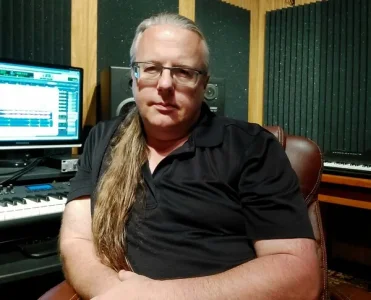
For nearly 30 years, American composer Mike Hall has been creating music for records and film. His journey began in rock and metal bands, where necessity led him to learn recording, production, mixing, and mastering before an unexpected approach from a Belgian filmmaker opened the door to film composition.

In this Industry Spotlight, Mike shares his journey from touring musician to film composer, his thoughts on how technology has transformed filmmaking and music, why composers should be involved earlier in the filmmaking process, and practical advice for independent filmmakers working with limited music budgets.


1. Please briefly introduce yourself and tell us how your journey from touring rock and metal musician to film composer began. What was the moment you realized this was the career you wanted to pursue?

Thanks Zoltan. My name is Mike Hall. I'm an American composer who has produced music for record and film for nearly 30 years. I started in music young but really never did anything until I was a teenager and then in my twenties. I played in rock and metal bands doing vocals or guitar. I learned recording and built a studio because we back then could never afford to record in a commercial studio. Before long I was producing our records as well as eventually records for other artists. I also started mixing and mastering for various record labels. Then one day I was contacted by a Belgian filmmaker who wanted to hire me to create the music for his horror film Hardcore Poisoned Eyes. Soon I was creating music for more smaller films. I really had no idea what I was doing but grew up loving movies so I figured it out and have been doing films ever since. I still produce records and work with other artists as well.


2. You've been composing music for films for nearly 30 years. Looking back, what has changed the most in the film industry and in the role of music in storytelling? What do you believe remains just as important today as it was when you started?

I think due to the technology, there are more and more filmmakers and music makers than ever before. Media is everywhere in out lives. This means there is more and more art surrounding us which is always a great thing. I think the technology is inspiring more people to become artists even if it's a hobby. That's always a good thing. As far as music. I still like listening to records focused on the music but music's role these days is no longer something we just listen to. People ask for a visual with the music to support yet never over take or distract from the visual. Also, I find that these days with music and film, there are no rules. It's more about the art and hoping to create something new.


3. Many independent filmmakers only begin thinking about music near the end of post-production. In your opinion, when should a composer become involved in the filmmaking process, and what are the benefits of bringing them in earlier?

That's true. It's frustrating when they say they have very little budget left for music once they've reached the point of Post. What that tells me is that the filmmaker never really cared about the music and it's effect for the film to begin with....as in there was never going to be a budget for music from the start which is how it is for some filmmakers. For those who do see the value in the music for their project I always suggest we start working on the music from the start so that the film need not wait on music when it reaches the stage of post. That is when you fine tune the music in final editing. And then there are those who start listening to music ideas as early as when they are writing the story as if the music inspires them as they are writing the scenes. So music is there not just to fill in spaces in film but also to inspire as the story is being created.


4. What are the most common mistakes filmmakers or producers make when working with a film composer, and what advice would you give them to build a more successful creative collaboration?

Well often I remind filmmakers that when seeking a composer, don't go with the biggest well known name...or how many awards or school they've had...that means little for what they can do for your project. It's about who created the music and sound that fits your project. Realize that even the most experienced composers can't create every style of music. The main thing when hiring a composer is how well you work with them. How comfortable are you both with expressing and working together on ideas. I have found that the easier you are to work with the less likely the filmmaker will want to work with anyone else. They tend to stay with what works. The other thing I often see with new filmmakers is that they think music needs to be in every scene and again, there truly are no rules but I've found that often less is more.


5. Much of your work has focused on dramas, dark dramas, horror and science fiction. What makes composing for these genres unique, and how do you approach creating the emotional atmosphere of a film through music?

Well they are all unique but also very similar in that they are there to assist with the audiences feel of the emotions of the character/s or the their feel of the environment. Ultimately what the audience needs to be feeling yet at the same time never to distract from the visuals and dialog. We as humans can truly only focus on one thing at a time the rest is in the background. Once the background steps forward than the audience is distracted from the focal point of what the filmmaker wants the focus to be. I use very simple emotionally driven pieces when there is dialog. The more complex the music is used then the attention doesnt need to focus on what the characters are saying or if the visual is broad enough that the audience is not needing to focus on one particular point but more of a broad view so some of the background elements can step forward and not distract.


6. You also mentor and lecture aspiring composers and filmmakers. What is the single most important piece of advice you would give to someone hoping to build a long-term career composing music for film?

Learn to listen, be very fluid with how you work and generally just be the coolest personality who you would want to work with. Egos are never wanted. You may be the absolute best composer or filmmaker but if no one can work with your personality, all the talent and training means nothing to others.


7. Many independent filmmakers work with limited budgets. What practical advice would you give them when planning, budgeting or licensing music for their films? Where should they invest, and where can they save without compromising quality?

Budgets are next to nothing anymore. The truth is that few filmmakers have budgets and rely on social media style fundraising which is always a long shot. However there are ways you can make things happen as an artist. You can be very resourceful. These days everyone is using AI music or music libraries which again you gotta do what you gotta do make your art happen. The issue currently with AI is that you don't know who even owns it. Music libraries are nice and affordable to work with if you are needing one off tracks and you don't really need the score to have a theme or blend. Personally I would contact a composer and say. I want to be upfront and tell you that I can not afford you to compose my film score BUT would I be able to license your already produced music for my film. Most of the time composers have libraries of tracks of various themes and edits already sitting there ready to be used in projects and most will work with the filmmaker. I am finding that I license out my library tracks and themes more often than I compose. It's just how the industry is. I am perfectly fine to get paid a little to showcase my music in great smaller films.


8. Are you currently working on any projects, or is there anything you'd like to share with the FilmPlatforms community?

Sure! I recently did a score for a London director who did a dark dramatic film based in Ireland titled ESCAPE which is doing very well in the film fests. I also recently finished music for a documentary. This week I am creating some orchestration backgrounds for a piano artist and her next record. It's wonderful to be included in the FilmPlatforms community!! Thank you so much!


About Mike Hall

Name: Mike Hall

Position: Film Composer, Music Producer

IMDb: https://www.imdb.com/name/nm3813302/

YouTube: https://www.youtube.com/@mikehallfilmcomposersoundd1023/videos

Email: MikeHallfilmcomposer@gmail.com


Interested in being featured?

FilmPlatforms Industry Spotlight showcases filmmakers, producers, distributors, sales agents, investors, festival professionals, and other voices from across the global film industry.

If you'd like to share your story, experience, and insights with our international filmmaking community, we'd love to hear from you.

Get in touch to be featured in an upcoming Industry Spotlight.
 
Last edited:

Mike Hall – Nearly 30 Years of Music, Film, and Creative Collaboration


View attachment 241


For nearly 30 years, American composer Mike Hall has been creating music for records and film. His journey began in rock and metal bands, where necessity led him to learn recording, production, mixing, and mastering before an unexpected approach from a Belgian filmmaker opened the door to film composition.

In this Industry Spotlight, Mike shares his journey from touring musician to film composer, his thoughts on how technology has transformed filmmaking and music, why composers should be involved earlier in the filmmaking process, and practical advice for independent filmmakers working with limited music budgets.


1. Please briefly introduce yourself and tell us how your journey from touring rock and metal musician to film composer began. What was the moment you realized this was the career you wanted to pursue?

Thanks Zoltan. My name is Mike Hall. I'm an American composer who has produced music for record and film for nearly 30 years. I started in music young but really never did anything until I was a teenager and then in my twenties. I played in rock and metal bands doing vocals or guitar. I learned recording and built a studio because we back then could never afford to record in a commercial studio. Before long I was producing our records as well as eventually records for other artists. I also started mixing and mastering for various record labels. Then one day I was contacted by a Belgian filmmaker who wanted to hire me to create the music for his horror film Hardcore Poisoned Eyes. Soon I was creating music for more smaller films. I really had no idea what I was doing but grew up loving movies so I figured it out and have been doing films ever since. I still produce records and work with other artists as well.


2. You've been composing music for films for nearly 30 years. Looking back, what has changed the most in the film industry and in the role of music in storytelling? What do you believe remains just as important today as it was when you started?

I think due to the technology, there are more and more filmmakers and music makers than ever before. Media is everywhere in out lives. This means there is more and more art surrounding us which is always a great thing. I think the technology is inspiring more people to become artists even if it's a hobby. That's always a good thing. As far as music. I still like listening to records focused on the music but music's role these days is no longer something we just listen to. People ask for a visual with the music to support yet never over take or distract from the visual. Also, I find that these days with music and film, there are no rules. It's more about the art and hoping to create something new.


3. Many independent filmmakers only begin thinking about music near the end of post-production. In your opinion, when should a composer become involved in the filmmaking process, and what are the benefits of bringing them in earlier?

That's true. It's frustrating when they say they have very little budget left for music once they've reached the point of Post. What that tells me is that the filmmaker never really cared about the music and it's effect for the film to begin with....as in there was never going to be a budget for music from the start which is how it is for some filmmakers. For those who do see the value in the music for their project I always suggest we start working on the music from the start so that the film need not wait on music when it reaches the stage of post. That is when you fine tune the music in final editing. And then there are those who start listening to music ideas as early as when they are writing the story as if the music inspires them as they are writing the scenes. So music is there not just to fill in spaces in film but also to inspire as the story is being created.


4. What are the most common mistakes filmmakers or producers make when working with a film composer, and what advice would you give them to build a more successful creative collaboration?

Well often I remind filmmakers that when seeking a composer, don't go with the biggest well known name...or how many awards or school they've had...that means little for what they can do for your project. It's about who created the music and sound that fits your project. Realize that even the most experienced composers can't create every style of music. The main thing when hiring a composer is how well you work with them. How comfortable are you both with expressing and working together on ideas. I have found that the easier you are to work with the less likely the filmmaker will want to work with anyone else. They tend to stay with what works. The other thing I often see with new filmmakers is that they think music needs to be in every scene and again, there truly are no rules but I've found that often less is more.


5. Much of your work has focused on dramas, dark dramas, horror and science fiction. What makes composing for these genres unique, and how do you approach creating the emotional atmosphere of a film through music?

Well they are all unique but also very similar in that they are there to assist with the audiences feel of the emotions of the character/s or the their feel of the environment. Ultimately what the audience needs to be feeling yet at the same time never to distract from the visuals and dialog. We as humans can truly only focus on one thing at a time the rest is in the background. Once the background steps forward than the audience is distracted from the focal point of what the filmmaker wants the focus to be. I use very simple emotionally driven pieces when there is dialog. The more complex the music is used then the attention doesnt need to focus on what the characters are saying or if the visual is broad enough that the audience is not needing to focus on one particular point but more of a broad view so some of the background elements can step forward and not distract.


6. You also mentor and lecture aspiring composers and filmmakers. What is the single most important piece of advice you would give to someone hoping to build a long-term career composing music for film?

Learn to listen, be very fluid with how you work and generally just be the coolest personality who you would want to work with. Egos are never wanted. You may be the absolute best composer or filmmaker but if no one can work with your personality, all the talent and training means nothing to others.


7. Many independent filmmakers work with limited budgets. What practical advice would you give them when planning, budgeting or licensing music for their films? Where should they invest, and where can they save without compromising quality?

Budgets are next to nothing anymore. The truth is that few filmmakers have budgets and rely on social media style fundraising which is always a long shot. However there are ways you can make things happen as an artist. You can be very resourceful. These days everyone is using AI music or music libraries which again you gotta do what you gotta do make your art happen. The issue currently with AI is that you don't know who even owns it. Music libraries are nice and affordable to work with if you are needing one off tracks and you don't really need the score to have a theme or blend. Personally I would contact a composer and say. I want to be upfront and tell you that I can not afford you to compose my film score BUT would I be able to license your already produced music for my film. Most of the time composers have libraries of tracks of various themes and edits already sitting there ready to be used in projects and most will work with the filmmaker. I am finding that I license out my library tracks and themes more often than I compose. It's just how the industry is. I am perfectly fine to get paid a little to showcase my music in great smaller films.


8. Are you currently working on any projects, or is there anything you'd like to share with the FilmPlatforms community?

Sure! I recently did a score for a London director who did a dark dramatic film based in Ireland titled ESCAPE which is doing very well in the film fests. I also recently finished music for a documentary. This week I am creating some orchestration backgrounds for a piano artist and her next record. It's wonderful to be included in the FilmPlatforms community!! Thank you so much!


About Mike Hall

Name: Mike Hall

Position: Film Composer, Music Producer

IMDb: https://www.imdb.com/name/nm3813302/

YouTube: https://www.youtube.com/@mikehallfilmcomposersoundd1023/videos

Email: MikeHallfilmcomposer@gmail.com


Interested in being featured?

FilmPlatforms Industry Spotlight showcases filmmakers, producers, distributors, sales agents, investors, festival professionals, and other voices from across the global film industry.

If you'd like to share your story, experience, and insights with our international filmmaking community, we'd love to hear from you.

Get in touch to be featured in an upcoming Industry Spotlight.

Great interview. Mike, I found your point about licensing existing music from composers particularly interesting. For a low-budget indie filmmaker, when do you think licensing existing tracks works better than commissioning an original score?
 
Back
Top