Rethinking the Future of Independent Filmmaking
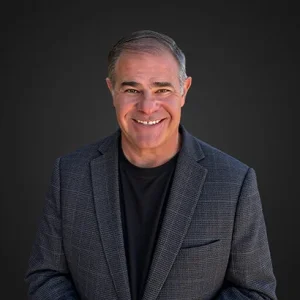
Photo courtesy of Ken Chamitoff / Indie Frame Network.
Welcome to another edition of FilmPlatforms Industry Spotlight, our ongoing interview series featuring professionals from across the global film industry.
In this edition, we're pleased to welcome Ken Chamitoff, filmmaker and founder of Indie Frame Network. In this interview, he shares his insights on independent film financing, creator-first distribution, artificial intelligence, and the vision behind building a more sustainable future for filmmakers.
Working filmmaker. Founder, Indie Frame Network.
1. Could you please introduce yourself in 3-4 sentences for readers who may not know you yet? How did your journey into filmmaking begin, and what ultimately led you to found Indie Frame Network?
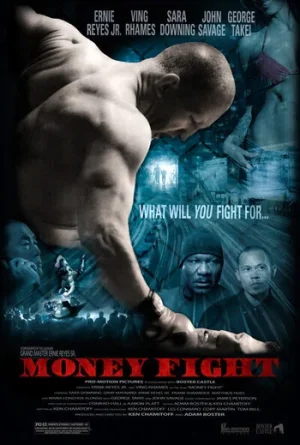
I'm Ken Chamitoff, a working filmmaker for over two decades, and the founder of Indie Frame Network. I started the way most of us do, making films because I could not imagine doing anything else, and I learned the business by producing and directing my own features, including The Red Canvas and the MMA drama Money Fight. Somewhere along the way I realized the tools were never the problem. The money was. Filmmakers kept getting better at making films while the system kept getting better at not paying them, and Indie Frame Network is my answer to that.
2. Your career has spanned several major technological shifts, from the early days of digital filmmaking to today's streaming era. Looking back, which change do you believe has had the greatest impact on independent filmmakers, and why?
I've lived through a few of these transitions from the inside. The Red Canvas was the first feature shot and completed on the Red One 4K camera, so I saw firsthand what happens when a tool suddenly puts cinema-quality images within reach of independent budgets. That was the moment the gates around production came down. But here is what I believe matters most: every technological shift so far has democratized making films, and none of them has democratized getting paid for films. Streaming was supposed to do it and instead it concentrated the money further. The greatest impact is still waiting to happen, and it is on the distribution side, not the production side.
3. The Red Canvas became the first feature film ever screened aboard the International Space Station. What did that milestone mean to you personally, and did it change the way you view the reach and possibilities of independent cinema?
To understand what that screening meant, you need the backstory. Making a feature was a stretch. Everyone around me said start with a short, start with a festival film, work your way up. I was not interested. I loved full length features and I still do. So I went straight at it, and the road was everything you would expect: raising money just to pay the lawyers to raise the money, production meltdowns, even a producer who tried to get me fired from my own project, which is a funny story for another day.
Through all of it, my brother was training for his first mission to the International Space Station. Watching him chase one of the rarest accomplishments on Earth kept me going. Millions dream of going to space and almost nobody does. In my head, if he could do that, I could finish a film. We are genetically pretty similar, after all. Competitive brothers can be a powerful engine.
The two dreams collided in the calendar. When The Red Canvas was set to premiere at the Martial Arts SuperShow in Florida, my brother was on the station, six months into orbit. I wanted him at the premiere more than almost anything. We talked often while he was up there, he was calling from a satellite of sorts, and when I told him I wished he could be in that theater, he said, maybe I can pull some strings and have NASA upload it to us. A few days later NASA agreed. We sent the file to Mission Control, they uploaded it, and my brother refused to press play until the moment of the first showing in Florida.
So while five busloads of people rode from the Gaylord to a packed theater for back to back screenings, with thousands watching that first night including three astronauts in the audience, my brother and two cosmonauts watched the same film 250 miles above the planet. The Red Canvas became the first film to premiere off planet. Two nearly impossible dreams, accomplished by two brothers, inside the same six month window.
We connected after the premiere and we were both emotional. Proud of each other, and sad that our father was not alive to see it. Perhaps he had the best seat in the house for that interstellar connection. One could hope.
What it changed in me is simple: I stopped believing in limitations. Rather than doubting what I was capable of, I learned to doubt what I thought my limitations were. There is just as much evidence saying you can do it as there is saying you can't, so you might as well doubt the thought that you can't. If you are going to doubt anything, doubt that your fears are real. Never doubt your capacity to learn, grow, overcome, and achieve your dreams.
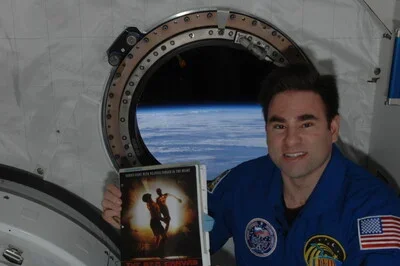
The Red Canvas becoming the first feature film screened aboard the International Space Station.
Photo courtesy of NASA / Ken Chamitoff.
4. You founded Indie Frame Network with a creator-first philosophy. What problems in today's film distribution landscape were you trying to solve, and what makes your platform different from traditional streaming services?
Traditional streaming pays filmmakers in ways they cannot see, verify, or live on. Licensing fees are one-time and small, and revenue-share models are usually built on metrics the filmmaker never gets to audit. Indie Frame Network flips the structure: filmmakers keep 65%, paid on real watch time. When someone watches your film, you earn, and you can see it. We also run the Free the Frame Festival with no entry fees, because charging a filmmaker for the chance to be seen has always struck me as backwards. I funded the platform, the festival, and the prize money personally. There is no private equity behind this, no studio money, no strings. It is a filmmaker building the thing filmmakers keep asking for.
5. Financing remains one of the biggest challenges for independent filmmakers. Based on your own experience, what makes a pitch deck truly effective? How did you connect with investors, and what practical advice would you give filmmakers looking to secure financing for a film project today?
On my first feature, we raised $3 million, and not one dollar came from the film industry. It came through relationships I had built over years in my martial arts photography business. The Red Canvas is a story of redemption and mentorship, and that resonated with the masters and grandmasters I had worked with for years. Through them, their students' families, and their wider circles, we assembled a large team of investors. That sounds easier in one sentence than it was in real life, but the lesson holds: your investors are rarely strangers who love film. They are people who already know you, trust you, and see themselves in the story you are telling. Look at the communities you already belong to before you pitch cold.
As for what makes the package effective, here is the practical list I give filmmakers today:
Take the time to prepare a proper legal equity sharing agreement, one that includes real risk factors. Do not over promise that your film will make millions. If anything, sell the message of the movie and the impact you want it to have on the people who watch it. People buy into a cause faster than they take on a risky investment. And tell your investors plainly not to put in more than they are willing to risk, because the risks are real. As filmmakers we are risking years of our own time and energy on an idea, and they deserve the same clarity about theirs.
Keep the rights to your project. Share revenue, not ownership of the work itself. And make sure investors understand how much skin you have in the game, even if your skin is time. Knowing you will finish what you start, and that you are risking alongside them, strengthens your case more than any projection.
Gather letters of intent from experienced production personnel and include them in your package: your DP, your first AD, your line producer, your entertainment attorney, your cast. Letters of intent are not contracts and promise nothing, but they show investors you are surrounded by qualified people who want in if the film gets funded. Every real asset you attach attracts money. When we learned George Takei was available, we raised his salary very quickly, and that pattern repeated with every new piece we brought to the production.
One more thing nobody tells you: the money rarely arrives all at once. We were still raising through post production. The last $150,000 came in after we secured potential recording dates with the Prague FILMharmonic Orchestra. A wise mentor of mine used to say, wish, want, need, got: you seldom get what you want, you only get what you absolutely need. To make independent films you need financial sources, but you do not need them all at once. Be open to a flow. Your first investor seeds the next. Keep moving with the resources you have, and more tends to arrive when you truly need it. There is a saying that entrepreneurship is jumping out of an airplane and sewing your parachute on the way down. Independent film is that, with a camera.
6. Artificial intelligence is rapidly transforming filmmaking, from production and post-production to distribution. Which AI developments excite you the most, and where do you believe filmmakers should remain cautious?
What excites me most is what the new tools do to the most expensive parts of filmmaking: sets and locations. On Money Fight I took a crew of 150 people out to the Valley of Fire in the Nevada desert, three hours north of Las Vegas. The lodging alone cost over $30,000. Today we can put the same actors in a studio, swap the backgrounds with AI and green screen, and do it so well the audience would never know. Right now I am creating a sequence for a sci-fi project I am developing, scenic aerial shots following a limo across Boston. A few years ago that meant a $25,000 helicopter day and a custom limo build or rental. Not anymore. All said and done, this sci-fi would have cost a minimum of $20 million below the line to make the traditional way. Now the production costs are radically lower and within reach.
And here is the part that keeps me optimistic: if there is something I cannot do with the tools today, I just wait a few weeks. The tools improve constantly. New solutions are arriving faster than the problems are showing up.
Where I urge caution is simple: the tool is not the story. Audiences do not fall in love with how something was made. They fall in love with what it makes them feel. A filmmaker who chases the technology instead of the craft will produce content, not cinema. My other caution is on the business side. Every technological wave so far has made films easier to make, and none of them has made filmmakers easier to pay. Do not assume this wave is different. Protect your rights, know your revenue terms, and remember that distribution, not production, is where independent filmmakers have always been squeezed.
7. What advice would you give filmmakers who are finishing their first feature film and want to build a long-term career rather than simply release a single project?
First, finish. A finished film, whatever its flaws, teaches you more than ten perfect scripts in a drawer, and it is the only thing that opens the next door. Second, understand that you are not building a film, you are building a body of work and a set of relationships. The people on your first crew, the investors who took the first risk, the audience that found you first, those relationships compound if you treat them well. My martial arts community funded my first feature and some of those relationships are still producing opportunities twenty years later.
Third, own what you make and understand every agreement you sign. Careers die quietly in bad contracts. And finally, there is power in pursuit. When you move on a dream relentlessly and refuse to back down, assistance shows up: money, people, insight, equipment. Momentum is a magnet. The filmmakers who build careers are not the most talented ones I have met. They are the ones who kept moving.
8. Looking ahead, what is your vision for Indie Frame Network over the next five years, and what impact would you like it to have on the future of independent filmmaking?
In five years I want Indie Frame Network to be the place where an independent film earns a living instead of a lottery ticket. That means a deep library of films that found their audience, filmmakers with monthly income they can plan a life around, and a festival that has launched careers without ever charging an entry fee. The impact I want is simple to state and hard to build: a working middle class of filmmakers. Not ten winners and a million invisible artists, but thousands of storytellers getting paid every month because people watched their work.
About Ken Chamitoff
Name: Ken Chamitoff
Position: Filmmaker & Founder
Company: Indie Frame Network
Country: United States
Website: www.ifnet.film
IMDb: https://www.imdb.com/name/nm0174647/
LinkedIn: https://www.linkedin.com/in/-chamitoff
Interested in being featured?
FilmPlatforms Industry Spotlight showcases filmmakers, producers, distributors, sales agents, investors, film festival representatives, and other professionals shaping the film industry.
If you'd like to share your story, experience, and insights with filmmakers from around the world, we'd love to hear from you.
Get in touch to be featured in an upcoming Industry Spotlight interview.
Photo courtesy of Ken Chamitoff / Indie Frame Network.
Welcome to another edition of FilmPlatforms Industry Spotlight, our ongoing interview series featuring professionals from across the global film industry.
In this edition, we're pleased to welcome Ken Chamitoff, filmmaker and founder of Indie Frame Network. In this interview, he shares his insights on independent film financing, creator-first distribution, artificial intelligence, and the vision behind building a more sustainable future for filmmakers.
Working filmmaker. Founder, Indie Frame Network.
1. Could you please introduce yourself in 3-4 sentences for readers who may not know you yet? How did your journey into filmmaking begin, and what ultimately led you to found Indie Frame Network?
I'm Ken Chamitoff, a working filmmaker for over two decades, and the founder of Indie Frame Network. I started the way most of us do, making films because I could not imagine doing anything else, and I learned the business by producing and directing my own features, including The Red Canvas and the MMA drama Money Fight. Somewhere along the way I realized the tools were never the problem. The money was. Filmmakers kept getting better at making films while the system kept getting better at not paying them, and Indie Frame Network is my answer to that.
2. Your career has spanned several major technological shifts, from the early days of digital filmmaking to today's streaming era. Looking back, which change do you believe has had the greatest impact on independent filmmakers, and why?
I've lived through a few of these transitions from the inside. The Red Canvas was the first feature shot and completed on the Red One 4K camera, so I saw firsthand what happens when a tool suddenly puts cinema-quality images within reach of independent budgets. That was the moment the gates around production came down. But here is what I believe matters most: every technological shift so far has democratized making films, and none of them has democratized getting paid for films. Streaming was supposed to do it and instead it concentrated the money further. The greatest impact is still waiting to happen, and it is on the distribution side, not the production side.
3. The Red Canvas became the first feature film ever screened aboard the International Space Station. What did that milestone mean to you personally, and did it change the way you view the reach and possibilities of independent cinema?
To understand what that screening meant, you need the backstory. Making a feature was a stretch. Everyone around me said start with a short, start with a festival film, work your way up. I was not interested. I loved full length features and I still do. So I went straight at it, and the road was everything you would expect: raising money just to pay the lawyers to raise the money, production meltdowns, even a producer who tried to get me fired from my own project, which is a funny story for another day.
Through all of it, my brother was training for his first mission to the International Space Station. Watching him chase one of the rarest accomplishments on Earth kept me going. Millions dream of going to space and almost nobody does. In my head, if he could do that, I could finish a film. We are genetically pretty similar, after all. Competitive brothers can be a powerful engine.
The two dreams collided in the calendar. When The Red Canvas was set to premiere at the Martial Arts SuperShow in Florida, my brother was on the station, six months into orbit. I wanted him at the premiere more than almost anything. We talked often while he was up there, he was calling from a satellite of sorts, and when I told him I wished he could be in that theater, he said, maybe I can pull some strings and have NASA upload it to us. A few days later NASA agreed. We sent the file to Mission Control, they uploaded it, and my brother refused to press play until the moment of the first showing in Florida.
So while five busloads of people rode from the Gaylord to a packed theater for back to back screenings, with thousands watching that first night including three astronauts in the audience, my brother and two cosmonauts watched the same film 250 miles above the planet. The Red Canvas became the first film to premiere off planet. Two nearly impossible dreams, accomplished by two brothers, inside the same six month window.
We connected after the premiere and we were both emotional. Proud of each other, and sad that our father was not alive to see it. Perhaps he had the best seat in the house for that interstellar connection. One could hope.
What it changed in me is simple: I stopped believing in limitations. Rather than doubting what I was capable of, I learned to doubt what I thought my limitations were. There is just as much evidence saying you can do it as there is saying you can't, so you might as well doubt the thought that you can't. If you are going to doubt anything, doubt that your fears are real. Never doubt your capacity to learn, grow, overcome, and achieve your dreams.
The Red Canvas becoming the first feature film screened aboard the International Space Station.
Photo courtesy of NASA / Ken Chamitoff.
4. You founded Indie Frame Network with a creator-first philosophy. What problems in today's film distribution landscape were you trying to solve, and what makes your platform different from traditional streaming services?
Traditional streaming pays filmmakers in ways they cannot see, verify, or live on. Licensing fees are one-time and small, and revenue-share models are usually built on metrics the filmmaker never gets to audit. Indie Frame Network flips the structure: filmmakers keep 65%, paid on real watch time. When someone watches your film, you earn, and you can see it. We also run the Free the Frame Festival with no entry fees, because charging a filmmaker for the chance to be seen has always struck me as backwards. I funded the platform, the festival, and the prize money personally. There is no private equity behind this, no studio money, no strings. It is a filmmaker building the thing filmmakers keep asking for.
5. Financing remains one of the biggest challenges for independent filmmakers. Based on your own experience, what makes a pitch deck truly effective? How did you connect with investors, and what practical advice would you give filmmakers looking to secure financing for a film project today?
On my first feature, we raised $3 million, and not one dollar came from the film industry. It came through relationships I had built over years in my martial arts photography business. The Red Canvas is a story of redemption and mentorship, and that resonated with the masters and grandmasters I had worked with for years. Through them, their students' families, and their wider circles, we assembled a large team of investors. That sounds easier in one sentence than it was in real life, but the lesson holds: your investors are rarely strangers who love film. They are people who already know you, trust you, and see themselves in the story you are telling. Look at the communities you already belong to before you pitch cold.
As for what makes the package effective, here is the practical list I give filmmakers today:
Take the time to prepare a proper legal equity sharing agreement, one that includes real risk factors. Do not over promise that your film will make millions. If anything, sell the message of the movie and the impact you want it to have on the people who watch it. People buy into a cause faster than they take on a risky investment. And tell your investors plainly not to put in more than they are willing to risk, because the risks are real. As filmmakers we are risking years of our own time and energy on an idea, and they deserve the same clarity about theirs.
Keep the rights to your project. Share revenue, not ownership of the work itself. And make sure investors understand how much skin you have in the game, even if your skin is time. Knowing you will finish what you start, and that you are risking alongside them, strengthens your case more than any projection.
Gather letters of intent from experienced production personnel and include them in your package: your DP, your first AD, your line producer, your entertainment attorney, your cast. Letters of intent are not contracts and promise nothing, but they show investors you are surrounded by qualified people who want in if the film gets funded. Every real asset you attach attracts money. When we learned George Takei was available, we raised his salary very quickly, and that pattern repeated with every new piece we brought to the production.
One more thing nobody tells you: the money rarely arrives all at once. We were still raising through post production. The last $150,000 came in after we secured potential recording dates with the Prague FILMharmonic Orchestra. A wise mentor of mine used to say, wish, want, need, got: you seldom get what you want, you only get what you absolutely need. To make independent films you need financial sources, but you do not need them all at once. Be open to a flow. Your first investor seeds the next. Keep moving with the resources you have, and more tends to arrive when you truly need it. There is a saying that entrepreneurship is jumping out of an airplane and sewing your parachute on the way down. Independent film is that, with a camera.
6. Artificial intelligence is rapidly transforming filmmaking, from production and post-production to distribution. Which AI developments excite you the most, and where do you believe filmmakers should remain cautious?
What excites me most is what the new tools do to the most expensive parts of filmmaking: sets and locations. On Money Fight I took a crew of 150 people out to the Valley of Fire in the Nevada desert, three hours north of Las Vegas. The lodging alone cost over $30,000. Today we can put the same actors in a studio, swap the backgrounds with AI and green screen, and do it so well the audience would never know. Right now I am creating a sequence for a sci-fi project I am developing, scenic aerial shots following a limo across Boston. A few years ago that meant a $25,000 helicopter day and a custom limo build or rental. Not anymore. All said and done, this sci-fi would have cost a minimum of $20 million below the line to make the traditional way. Now the production costs are radically lower and within reach.
And here is the part that keeps me optimistic: if there is something I cannot do with the tools today, I just wait a few weeks. The tools improve constantly. New solutions are arriving faster than the problems are showing up.
Where I urge caution is simple: the tool is not the story. Audiences do not fall in love with how something was made. They fall in love with what it makes them feel. A filmmaker who chases the technology instead of the craft will produce content, not cinema. My other caution is on the business side. Every technological wave so far has made films easier to make, and none of them has made filmmakers easier to pay. Do not assume this wave is different. Protect your rights, know your revenue terms, and remember that distribution, not production, is where independent filmmakers have always been squeezed.
7. What advice would you give filmmakers who are finishing their first feature film and want to build a long-term career rather than simply release a single project?
First, finish. A finished film, whatever its flaws, teaches you more than ten perfect scripts in a drawer, and it is the only thing that opens the next door. Second, understand that you are not building a film, you are building a body of work and a set of relationships. The people on your first crew, the investors who took the first risk, the audience that found you first, those relationships compound if you treat them well. My martial arts community funded my first feature and some of those relationships are still producing opportunities twenty years later.
Third, own what you make and understand every agreement you sign. Careers die quietly in bad contracts. And finally, there is power in pursuit. When you move on a dream relentlessly and refuse to back down, assistance shows up: money, people, insight, equipment. Momentum is a magnet. The filmmakers who build careers are not the most talented ones I have met. They are the ones who kept moving.
8. Looking ahead, what is your vision for Indie Frame Network over the next five years, and what impact would you like it to have on the future of independent filmmaking?
In five years I want Indie Frame Network to be the place where an independent film earns a living instead of a lottery ticket. That means a deep library of films that found their audience, filmmakers with monthly income they can plan a life around, and a festival that has launched careers without ever charging an entry fee. The impact I want is simple to state and hard to build: a working middle class of filmmakers. Not ten winners and a million invisible artists, but thousands of storytellers getting paid every month because people watched their work.
About Ken Chamitoff
Name: Ken Chamitoff
Position: Filmmaker & Founder
Company: Indie Frame Network
Country: United States
Website: www.ifnet.film
IMDb: https://www.imdb.com/name/nm0174647/
LinkedIn: https://www.linkedin.com/in/-chamitoff
Interested in being featured?
FilmPlatforms Industry Spotlight showcases filmmakers, producers, distributors, sales agents, investors, film festival representatives, and other professionals shaping the film industry.
If you'd like to share your story, experience, and insights with filmmakers from around the world, we'd love to hear from you.
Get in touch to be featured in an upcoming Industry Spotlight interview.


